



Vacuum Leak Test Cover and Professional Hot Air Gun Suppliers
Ensuring the airtight integrity of geomembrane liners is a critical phase in large-scale environmental protection projects. For engineers and site managers, the transition from welding to validation requires high-precision tools that leave no room for error. The vacuum leak test cover is specifically engineered to detect imperfections in welded cross seams and T-seams, where traditional visual inspections often fail. By creating a controlled negative pressure environment, this tool allows operators to verify the bond strength and continuity of thermoplastic welds with absolute certainty.
Whether you are managing a hazardous waste landfill or a water reservoir, the ability to perform rapid, non-destructive testing on-site is invaluable. MM-Tech provides the technical infrastructure to ensure that every weld is firm and flawless. By integrating vacuum pressure testing into the quality control workflow, projects can avoid costly rework and long-term environmental leakage, ensuring that the synthetic lining functions as a reliable barrier for decades.

The Mechanics of Vacuum Leak Detection in Thermoplastic Welding
The vacuum pressure test cover operates on the principle of differential pressure. When applied over a welded seam, specifically the complex intersection points like T-seams or cross-joints, the device creates an isolated chamber. A vacuum pump is then used to evacuate air from the central cavity of the geomembrane weld, establishing a state of negative pressure. If the weld is perfectly sealed, the pressure gauge will maintain a constant reading over a specified duration.
This method is superior to air pressure tests in specific scenarios because it pulls the membrane against the testing surface, highlighting any micro-pores or channels that could lead to seepage. For professionals searching for reliable hot air gun suppliers, the inclusion of testing equipment like the vacuum leak cover is essential for a complete quality assurance ecosystem. It transforms the welding process from a manual craft into a verifiable engineering standard.
The effectiveness of the test depends on the stability of the vacuum and the seal of the hemispherical cover. By maintaining a vacuum of -84Kpa, the equipment can detect even the smallest apertures that might be invisible to the naked eye but could compromise the entire containment system under operational loads.

Critical Application Scenarios for Environmental Protection Liners
In the field of environmental protection equipment, the integrity of geomembranes is non-negotiable. The vacuum leak test cover is indispensable in several high-stakes environments:
- Landfill Containment: Preventing leachate from contaminating groundwater requires 100% seam reliability.
- Mining Heap Leach Pads: Chemical resistance must be paired with physical seal integrity to prevent toxic runoff.
- Water Treatment Plants: Ensuring that lining systems in sedimentation tanks are leak-proof to maintain water purity.
- Tunnel Waterproofing: Verifying that thermoplastic membranes are correctly fused in subterranean infrastructure.
The most challenging areas are often the "complex welds"—where multiple sheets meet. Standard linear welding is easier to test, but T-seams are prone to voids. The hemispherical shape of the MM-Tech vacuum cover is specifically designed to encompass these irregular geometries, providing a comprehensive seal that allows for accurate negative pressure readings across the entire junction.
Operational Guidelines for Accurate Weld Validation
To achieve a qualified inspection, operators must follow a rigorous protocol. First, the surface of the geomembrane must be cleaned of debris to ensure the cover creates a vacuum-tight seal. Once the cover is positioned over the cross-seam, the vacuum pump is activated. The key is the "holding period"; after closing the valve, the operator must observe the pressure gauge for a predetermined time. Any drop in the pointer indicates a leak, necessitating a re-weld of the affected area.
The use of B-class insulation and a built-in thermo protector (resetting at 130±5°C) ensures that the pump remains stable even in the demanding temperature ranges of outdoor construction sites (5-40°C). This industrial-grade construction prevents equipment failure during critical inspection phases, ensuring that project timelines are not delayed by tool malfunction.
By combining these testing tools with high-quality welding machines, contractors can provide a documented "Quality Log" to clients, proving that every single critical joint has been vacuum-tested and certified, which is often a mandatory requirement for international infrastructure tenders.
Technical Specifications and Performance Parameters
| Parameter Category | Technical Specification | Operational Limit | Standard/Grade |
|---|---|---|---|
| Electrical Input | 230V / 50-60HZ | ≤150W Power Consumption | Industrial Grade |
| Vacuum Performance | Max -84Kpa | ≤30L/min Air Volume | High Precision |
| Environmental Range | 5°C to 40°C | Noise ≤48dB(A) | Site-Ready |
| Safety Systems | Thermo Protector | 130±5°C Auto Reset | B Class Insulation |
| Testing Capacity | 700cm² Area | Hemispherical Shape | 1500V/50HZ Dielectric |
Evaluating Vacuum Testing Equipment for Project Procurement
When procuring leak detection tools, procurement managers must look beyond the basic vacuum rating. The reliability of the pressure gauge and the durability of the cover material are paramount. A cover that warps or fails to seal perfectly will produce "false positives," leading to unnecessary and expensive re-welding of perfectly good seams.
MM-Tech focuses on a closed-loop of customized solution services. Since every project has different geomembrane thicknesses and material compositions (such as HDPE, PVC, or TPO), the equipment must be robust enough to handle various surface textures. Our internal quality management system eliminates potential defects before delivery, ensuring that the equipment arrives calibrated and ready for immediate deployment.
Furthermore, the weight and portability of the unit—approximately 5kg net weight—allow for easy transport across vast construction sites. This mobility is essential for maintaining a high cadence of testing without taxing the onsite labor force, directly contributing to the overall efficiency of the installation process.
Future Trends in Thermoplastic Seam Verification
The industry is moving toward more intelligent and automated verification systems. While vacuum testing remains the gold standard for complex joints, the integration of digital pressure sensors and data logging is the next frontier. Future iterations of these tools will likely allow for the digital recording of every test, creating a permanent, timestamped record of seal integrity that can be audited remotely by project owners.
Sustainable construction practices are also driving the demand for more energy-efficient pumps and durable, recyclable cover materials. As environmental regulations tighten globally, the pressure on hot air gun suppliers and welding equipment manufacturers to provide comprehensive, verifiable testing kits will increase. The goal is a "zero-leak" reality for all containment systems.
Choosing a partner like MM-Tech, with a deep technical accumulation in thermoplastic welding, ensures that your project stays ahead of these industry shifts. By investing in professional-grade validation tools today, companies can reduce their long-term liability and ensure the success of critical infrastructure projects.
Frequently Asked Questions on Vacuum Leak Testing
What is the primary purpose of a vacuum leak test cover?
The vacuum leak test cover is used for non-destructive leak detection at geomembrane construction sites, specifically targeting complex welded areas like cross seams and T-seams where traditional testing is difficult.
How do I determine if a weld has passed the vacuum test?
After the vacuum pump fills the cavity with negative pressure and the valve is closed, you observe the pressure gauge. If the pointer remains unchanged for the required period, the weld is considered qualified.
Can this tool be used on all types of geomembranes?
Yes, it is suitable for most thermoplastic welding applications, including HDPE, TPO, and PVC, provided the surface allows for a vacuum seal to be formed by the hemispherical cover.
What is the maximum vacuum pressure this device can achieve?
The device is capable of reaching a maximum vacuum of -84Kpa, which is sufficient to detect micro-leaks in industrial-grade thermoplastic welds.
Is the equipment safe for long-term onsite use?
Yes, it features B-class insulation and an auto-reset thermo protector at 130±5°C to prevent overheating, making it durable for construction environments between 5-40°C.
Why is vacuum testing preferred over air pressure testing for T-seams?
Vacuum testing pulls the membrane against the testing surface, which is more effective for identifying gaps in complex, non-linear junctions compared to pushing air into the seam.
Technical References and Industry Standards
- ASTM International - Standards for Geosynthetic Seam Testing
- ISO Standards for Thermoplastic Welding Quality Control
- International Geosynthetics Society - Technical Guidelines
- US EPA - Guidelines for Landfill Liner Integrity
For professional project solutions and high-performance thermoplastic welding equipment, MM-Tech offers the expertise and tools necessary to ensure your environmental barriers are flawless. Contact our technical team to customize a validation package for your specific project requirements.
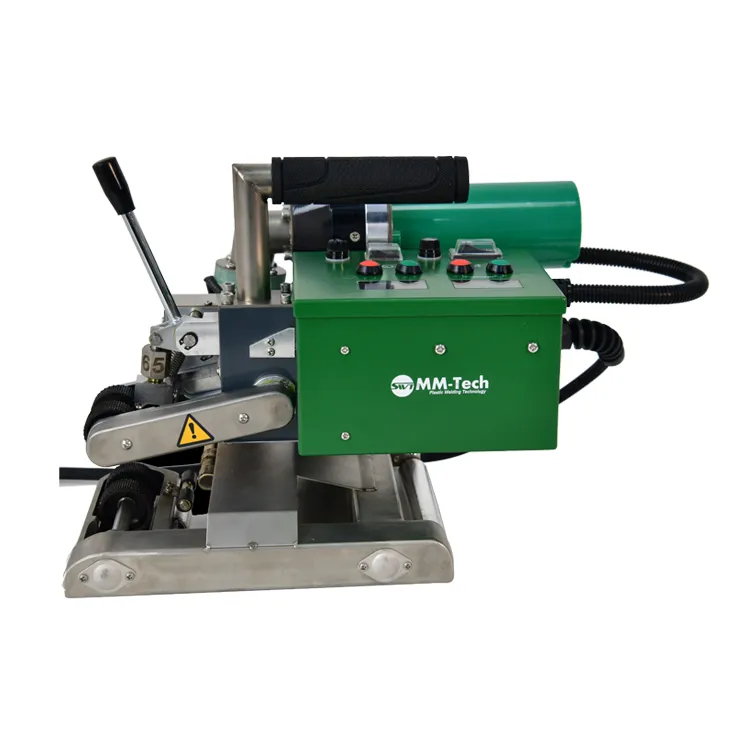
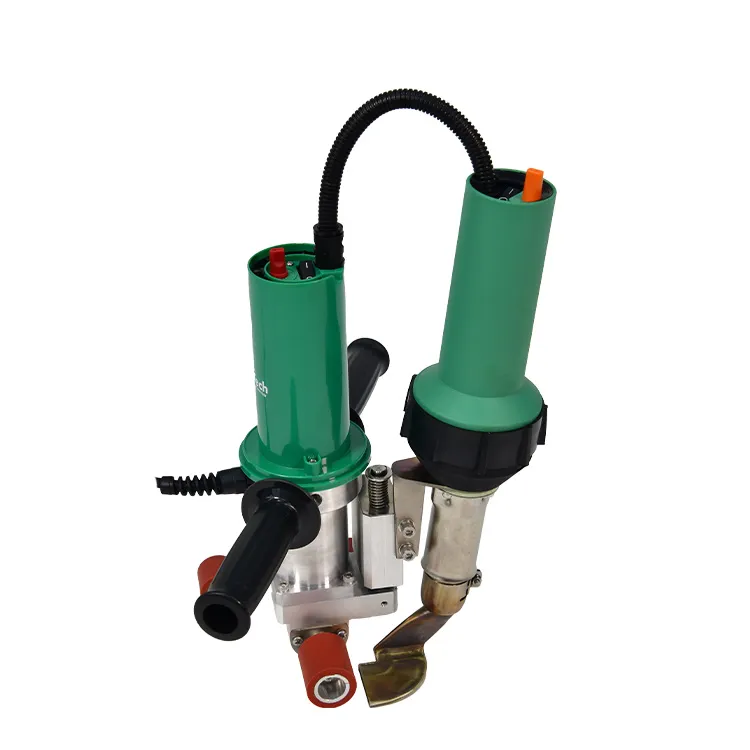
Industry Insights and Related Equipment








 English