



Professional Plastic Welder Better Than a cheap hot air gun
Achieving a seamless, leak-proof seal in thermoplastic construction requires more than just heat; it requires precise thermal control and consistent extrusion. For professionals managing wastewater treatment tanks or large-scale geomembrane installations, the balance between cost-efficiency and industrial-grade performance is critical. While many search for a cheap hot air gun for basic tasks, high-stakes infrastructure projects demand integrated systems like the SWT-NS600C, which combines a high-capacity hot air system with an extruder to ensure structural integrity.
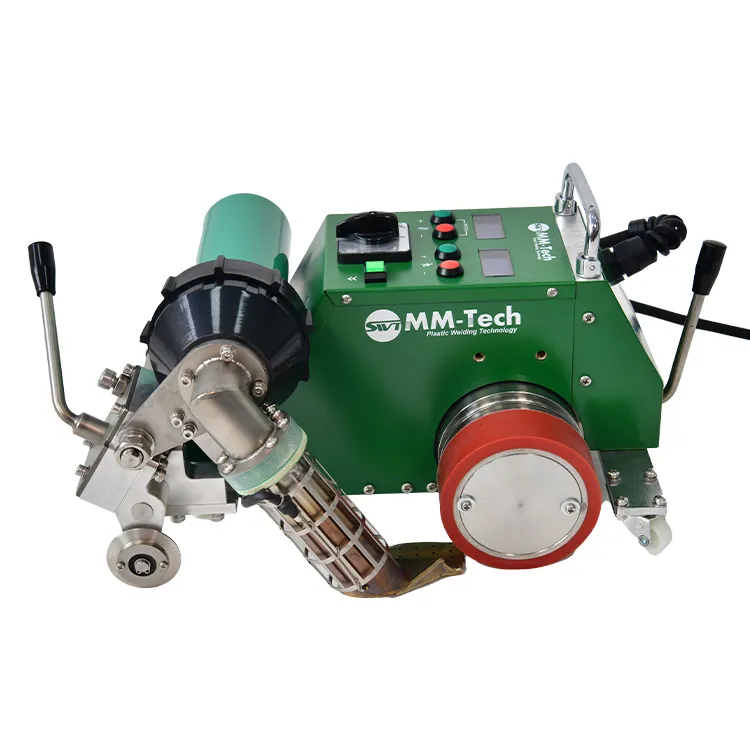
The SWT-NS600C is engineered specifically for the connection and waterproof sealing of plastic pipes and sheets. By integrating a 1600W CE-certified hot air component with a dedicated welding rod heating system, this machine eliminates the common failures associated with standalone heating tools. Whether you are working with PE, PP, or PVDF, the ability to precisely control air and extrusion temperatures ensures that every weld is firm, reliable, and flawlessly executed in demanding workshop or on-site environments.

Advanced Thermal Synergy: Integrating Hot Air and Extrusion Technology
The core technical advantage of the SWT-NS600C lies in its dual-heating architecture. Unlike standard heating tools, this system employs a three-pronged thermal approach: a 1600W hot air gun for surface preparation and material softening, an 800W extruding power unit to feed the welding material, and an additional 800W welding rod heater. This synergy allows the operator to maintain an optimal temperature gradient, preventing the common issue of "cold joints" that often occur when using insufficient heating equipment.
Precision is managed via an integrated LCD temperature controller, allowing users to adjust air temperatures between 20-620℃ and extrusion temperatures from 50-380℃. This range is vital for versatility, as different thermoplastics—such as PVDF and PP—have vastly different melting points and thermal sensitivities. Furthermore, the inclusion of motor cold protection ensures that the HIKOKI driving motor remains operational even during prolonged use in extreme weather conditions, providing a level of reliability that entry-level tools cannot match.
- Dual-Heating System: Simultaneous surface heating and material extrusion for maximum weld strength.
- LCD Precision: Real-time monitoring and adjustment of critical thermal parameters.
- Industrial Motor: Equipped with a high-performance HIKOKI auger for consistent extruding volumes of 2-2.5 Kg/h.

Versatile Application Logic for Environmental and Chemical Infrastructure
The application of the SWT-NS600C extends across several critical industrial sectors where waterproof integrity is non-negotiable. In the construction of sewage treatment tanks and aquaculture ponds, the machine is used for geomembrane sealing and the welding of chemical-resistant plastic sheets. The ability to handle material thicknesses from 1mm up to 20mm makes it a primary choice for both thin-film liners and thick-walled industrial piping.
A significant operational challenge in these environments is accessibility. To solve this, the SWT-NS600C features a 360° rotatable welding head, or alternatively, two different angle welding heads. This flexibility allows technicians to execute precise welds in tight corners, overlapping joints, and vertical seams without compromising the angle of the extrusion bead. This geometric adaptability is what transforms a standard welding process into a professional-grade sealing operation.
From the fabrication of chemical storage tanks to the intricate splicing of plastic components in workshop production, the machine's compatibility with PE, PP, and PVDF ensures that it can be adapted to various chemical resistance requirements. By providing a consistent weld bead, the SWT-NS600C reduces the risk of leaks in hazardous waste containment systems, ensuring environmental safety and compliance with international standards.
Evaluating Technical Requirements for Thermoplastic Welding Selection
When selecting welding equipment, procurement managers often face a trade-off between initial cost and long-term operational reliability. While a cheap hot air gun might suffice for shrinking sleeves or minor repairs, it lacks the extrusion capability required for structural bonding. For industrial applications, the primary evaluation criteria should be the stability of the thermal output and the consistency of the extrusion volume.
The SWT-NS600C addresses these needs by focusing on "closed-loop" quality. With a welding rod diameter of φ3mm or 4mm (customizable to 5mm), the machine provides a substantial weld bead that fills gaps and creates a fused molecular bond between sheets. For engineers, the key is the "material thickness capability"—the SWT-NS600C's range of 1-20mm covers nearly all standard geomembrane and pipe specifications used in the environmental protection industry today.
Moreover, the availability of specialized accessories—such as Overlapping, Right Angle, Round, and Blank welding shoes—means the tool can be reconfigured for different joint geometries. This modularity reduces the need for multiple machines on a single site, streamlining the tool inventory and reducing overall project overhead while maintaining high technical standards.
Technical Specifications and Material Compatibility Matrix
| Parameter Component | Technical Specification | Operating Range/Value | Industrial Impact |
|---|---|---|---|
| Thermal Power | Hot Air / Extrusion / Rod | 1600W / 800W / 800W | High-speed melting and fusing |
| Temperature Control | LCD Digital Controller | Air: 20-620℃ / Ext: 50-380℃ | Material-specific precision |
| Extrusion Capacity | HIKOKI Driving Motor | 2-2.5 Kg/h | Consistent bead volume |
| Material Range | PE, PP, PVDF | Thickness: 1-20 mm | Broad industrial versatility |
| Physical Design | Rotatable Head | 360° / Dual Angle | Enhanced accessibility |
Ensuring Quality Control in Large-Scale Infrastructure Projects
In the context of landfill liners and water containment systems, a single weld failure can lead to catastrophic environmental contamination. Therefore, the manufacturing process of the welding equipment itself must be rigorous. MM-Tech employs an internal quality management system designed to eliminate potential defects before delivery. This commitment to "zero-defect" shipping is essential for equipment that must operate in remote on-site construction zones where downtime is prohibitively expensive.
The reliability of the SWT-NS600C is further bolstered by its CE certification and the use of high-end components, such as the Japanese HIKOKI extruding auger. By focusing on the durability of the heating elements and the precision of the motor, the machine maintains stable operation across varying voltages (230V) and frequencies (50/60Hz), making it suitable for export to over 100 countries with diverse electrical grids.
Beyond the hardware, the value lies in the technical support ecosystem. MM-Tech provides a comprehensive service network that offers remote maintenance and high-speed delivery of replacement parts. For project managers, this means that the stability of the machine is backed by a guarantee of continuity, ensuring that project timelines are met without interruption caused by equipment failure.
Future Trends in Thermoplastic Welding and Procurement Strategies
The industry is moving toward more intelligent, environmentally friendly welding solutions. We are seeing a shift from manual, estimation-based heating to digitally controlled, data-driven processes. The integration of LCD controllers and precise power management in machines like the SWT-NS600C is the first step toward fully automated, monitored welding systems that can record temperature data for quality auditing purposes.
For procurement professionals, the strategy is shifting from "lowest initial cost" to "lowest total cost of ownership (TCO)." While the temptation to purchase a cheap hot air gun is high for small budgets, the resulting rework, material waste, and risk of leakages in professional projects often make the high-end extruder the more economical choice in the long run. Investing in equipment that offers customization—such as tailored welding rod diameters and specialized shoes—allows for a more efficient workflow.
As environmental regulations become more stringent, the demand for flawless seals in HDPE and PVDF liners will only increase. Companies that adopt professional-grade extrusion welding now will be better positioned to handle the complex requirements of next-generation infrastructure projects, ensuring that every joint is not just a connection, but a permanent, structural bond.
Technical Insights and Procurement FAQ
What is the difference between a standard hot air gun and the SWT-NS600C?
A standard hot air gun only provides heat to soften plastic. The SWT-NS600C is an extrusion welder that combines a 1600W hot air system with an 800W extruder and rod heater. This allows it to add new welding material (rods) into the joint, creating a structural weld rather than a simple surface melt, which is essential for waterproof sealing.
Which materials can be welded using the SWT-NS600C?
The machine is specifically designed for thermoplastics, including Polyethylene (PE), Polypropylene (PP), and Polyvinylidene Fluoride (PVDF). Its adjustable temperature range (up to 620℃ for air) makes it compatible with these diverse materials.
Can this machine handle very thick plastic sheets?
Yes, the SWT-NS600C is capable of welding materials with thicknesses ranging from 1mm to 20mm, making it suitable for both thin liners and thick industrial plastic piping.
How does the 360° rotatable head benefit the operator?
The rotatable head allows the operator to maintain the correct welding angle even when working in tight spaces, vertical seams, or complex corners. This ensures a consistent extrusion bead and prevents gaps that could lead to leaks.
What maintenance is required for the HIKOKI extruding motor?
The motor is built for industrial use and includes cold protection to prevent overheating. Regular cleaning of the auger and ensuring the use of compatible welding rod diameters (φ3, 4, or 5mm) will maintain optimal extrusion volumes of 2-2.5 Kg/h.
Is the equipment suitable for international use?
Yes, it operates on 230V with a frequency of 50/60Hz and is CE certified, making it compatible with power standards in over 100 countries where MM-Tech products are exported.
Industrial References and Technical Standards
- ISO Standards for Thermoplastic Welding Quality
- American Welding Society (AWS) Technical Guidelines
- ASTM International Standards for Geomembrane Seams
- European Conformity (CE) Marking Requirements for Industrial Machinery
For professionals requiring a balance of power, precision, and durability, the SWT-NS600C represents a significant upgrade over basic heating tools. By integrating advanced extrusion technology with professional thermal control, MM-Tech ensures that your infrastructure projects are sealed for the long term.
Related Technical Resources









 English