
-
 Email:news@peweldingmachine.com;sales2@peweldingmachine.com
-
 +86-137 3974 5191
-
 Add:
NO.355,Youyi Street,Qiaoxi District,Shijiazhuang,Hebei,China.



Buying a Heat Gun: Safe, Precise, Affordable—Why Us?

Buying a Heat Gun: Safe, Precise, Affordable—Why Us?
Oct . 08, 2025 22:55
What I Look For When Buying a Heat Gun (and a closer look at the SWT-NS1600S)
If you’re buying a heat gun for serious plastic work—welding, thermoforming, shrink tasks—you quickly learn there’s a gap between hobby tools and industrial hand welders. The SWT-NS1600S Hot Air Welding Machine sits on that pro side: double-insulated, thermostatically controlled, continuously adjustable, and comfortable for long shifts. I’ve seen it on repair trucks and in small fabrication rooms—PVC tarps, PP air ducts, PE liners, even PVDF lab parts.

Industry snapshot
Demand for hot-air plastic welding keeps inching up—maintenance teams are repairing geomembranes instead of replacing whole panels; signage and packaging lines want faster shrink cycles; labs need clean PVDF welds. To be honest, a lot of folks still try multi-purpose DIY guns and then switch once they see bead quality and temperature stability matter more than the sticker price. Pros care about safety categories (Class II double insulation), stable temperature under load, and nozzle ecosystem.
Product at a glance: SWT-NS1600S
Origin: NO.355, Youyi Street, Qiaoxi District, Shijiazhuang, Hebei, China. In fact, most of the units I’ve handled there ship with conservative temperature control and a straightforward dial—less to fail on site. Many customers say the balance is decent; it doesn’t “torque” your wrist when speed-welding long seams.
| Spec | SWT-NS1600S (≈ typical) | Notes |
|---|---|---|
| Power | ≈ 1600 W | Real-world draw varies by temperature/airflow |
| Temperature control | Thermostatic, continuous | Stable output for PVC/PP/PE/PVDF |
| Adjustment range | ≈ 40–650°C | Measured at nozzle; load and tips affect it |
| Airflow | ≈ 180–240 L/min | Depends on nozzle and mains voltage |
| Insulation | Double-insulated (Class II) | No protective earth required |
| Compatible materials | PVC, PP, PE, PVDF | Plus shrinking, drying, thermoforming |
| Heater element life | ≈ 500–1000 h | Duty cycle and cleanliness matter |

Where it shines
- Plastic welding: overlap seams on PVC tarps, speed-welding PP sheets, PE patching, PVDF lab duct joins.
- Thermoforming: small brackets and guards, on-the-fly jig tweaks.
- Shrinking/drying: cable boots, label shrink, paint flash-off (careful with substrates).
Advantages: predictable heat, rugged build, and—surprisingly—quiet enough that team comms aren’t a mess. If you’re buying a heat gun for fieldwork, the double insulation and analog dial are, I guess, a kind of insurance.

Process, testing, and quality
Typical flow: clean substrate → bevel or prep edges → preheat to spec → weld (tack, then speed-weld with appropriate nozzle) → cool under pressure → test. For plastics, German DVS practice is the north star.
- Methods: hot-gas overlap weld, spot weld, speed nozzle weld; rod selection matches base (PP with PP, etc.).
- Testing: visual bead, bend test; DVS 2203 for weld testing; for PE parts, reference parameters from DVS 2207.
- Safety/Compliance: Class II tool design under IEC/EN 60335-2-45; many buyers also check UL 499 and RoHS.
- Service life: heater elements last longer with clean air, lower peak temps, and proper cool-down.
- Industries: roofing membranes, geomembranes, signage, packaging, HVAC plastics, lab ventilation (PVDF).

Vendor comparison (real-world buyer notes)
| Vendor/Model | Control & Stability | Certs (≈) | After‑sales | Price band |
|---|---|---|---|---|
| SWT-NS1600S | Thermostatic, steady under load | IEC/EN 60335; RoHS (typ.) | Direct parts, quick heater swaps | Mid |
| Generic Import A | Drifts at high duty | Basic CE claim | Limited | Low |
| Pro Brand B | Closed-loop digital | IEC/UL, full test data | Global centers | High |
If you’re buying a heat gun for a small shop, the SWT-NS1600S hits a sweet spot: industrial enough without the premium of full digital closed-loop systems.

Customization, cases, and feedback
- Customization: nozzle kits for speed welding, slot nozzles for roofing, reducer tips for PVDF tubes; cord lengths and plug types on request.
- Case 1: Geomembrane repair crew shaved rework by ~30% after switching to matched PP rod and a speed nozzle—bead consistency improved.
- Case 2: Packaging line used low-temp setting and high airflow to shrink labels without “orange peel,” after a quick airflow test.
- Customer notes: “Holds temp outdoors better than our old unit”; one caveat—keep a spare heater on the truck, because when you need it, you really need it.
Final nudge: if you’re buying a heat gun, verify documented compliance (IEC/EN 60335-2-45), check service parts availability, and ask for weld parameter guidance (DVS-style) for your exact material stack-up.
Authoritative references
- IEC 60335‑2‑45: Particular requirements for portable heating tools (heat guns). IEC Webstore.
- DVS 2207: Welding of thermoplastics – Hot gas welding. DVS Media.
- DVS 2203: Testing of welded joints between thermoplastics. DVS Media.
- UL 499: Electric Heating Appliances. UL Standards.
- RoHS Directive 2011/65/EU on hazardous substances. European Commission.

Related Products

Related Video

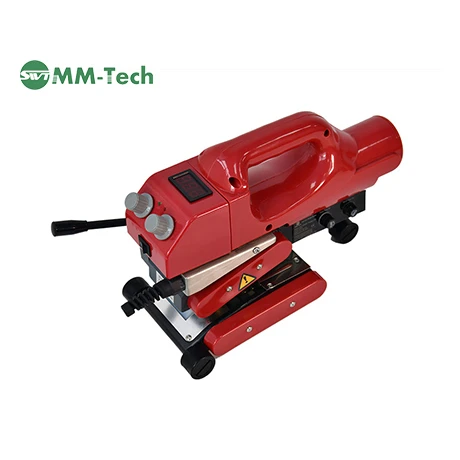

Geo Hot Wedge Welder With Digital Display SWT NS800D Operation Guide
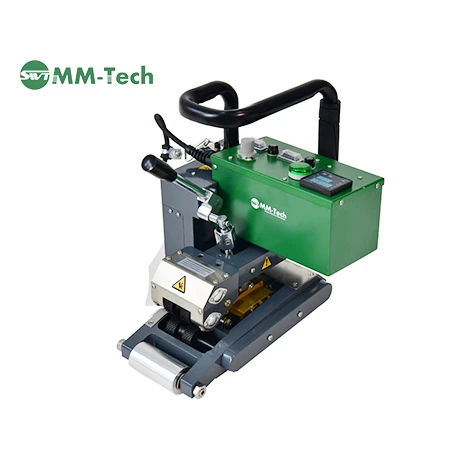
Heavy-Duty Geo Hot Wedge Welder SWT-NS900 Operation Guide
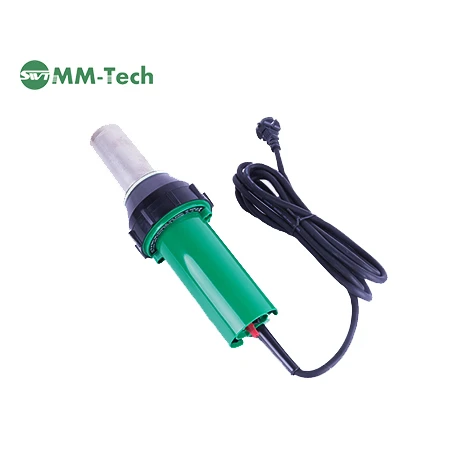
Powerful Professional Hot Air Tool SWT-NS3400A Operation Guide
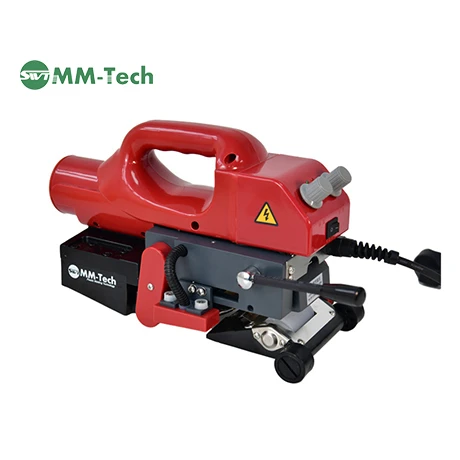
Geo Hot Wedge Welder SWT NS800 Operation Guide
Compact HDPE Hot Wedge Welding Machine SWT-NSGM1 Operation Guide
Related News

2026-07-01 09:39:14
Industrial Guide to Using a Mechanical Line Leak Detector
Maintaining the structural integrity of thermoplastic pipelines is critical for environmental protection and operational efficiency. A high-precision mechanical line leak detector is an indispensable tool for detecting failures in geomembrane liners and plastic piping systems. Whether dealing with sewage treatment plants, landfills, or water conservancy projects, ensuring a leak-free seal prevents hazardous contamination and costly repairs. In this guide, we will explore how advanced detection combined with professional welding equipment ensures the highest standards of industrial waterproofing.

2026-06-29 16:57:32
Professional Leak Detector AS for Geomembrane Weld Integrity
Maximizing Weld Integrity with a Professional Leak Detector AS In the realm of environmental protection and geosynthetic installation, ensuring the absolute sealing of geomembrane seams is not just a quality requirementit is a critical safety mandate. A high-precision leak detector as air pressure tester serves as the primary tool for validating the integrity of double-track welds. By monitoring pressure changes within the closed air cavity of a weld, operators can definitively determine if a seam is airtight or if it requires immediate repair. This process prevents catastrophic leaks in landfills, mining ponds, and water containment systems, ensuring long-term environmental security.

2026-06-27 17:37:57
Industrial PVC Leak Detection with Fluorescent Leak Finder K
Maximizing Pipeline Integrity with the Fluorescent Leak Finder K In the demanding world of environmental protection and geosynthetic welding, maintaining a leak-proof seal is not just a quality requirementit is a critical safety mandate. The fluorescent leak finder k offers an advanced diagnostic solution for detecting microscopic breaches in PVC and HDPE liners. By leveraging ultraviolet fluorescence, this tool allows technicians to visualize leaks that are invisible to the naked eye, ensuring that industrial containment systems remain secure. Whether you are dealing with rigid uPVC or flexible PVC membranes, precision in leak detection is the only way to prevent catastrophic environmental contamination.

2026-06-26 16:41:41
Guide to Analyzing Electronic Leak Detector Price and Quality
Analyzing Electronic Leak Detector Price: A Guide to Choosing the Right Equipment In the realm of environmental protection and geosynthetic engineering, ensuring the integrity of waterproof membranes is critical. Whether you are dealing with landfills, sewage treatment plants, or water conservancy projects, the ability to pinpoint a breach is essential. Understanding the electronic leak detector price involves more than just looking at a tag; it requires an analysis of precision, durability, and the specific materials being tested, such as HDPE or PVC. Investing in high-quality detection equipment prevents catastrophic environmental leaks and reduces long-term maintenance costs for civil engineering projects.

2026-06-25 18:38:39
High Precision Intake Leak Tester for Engine Diagnostics
Ensuring Precision Performance with an Intake Leak Tester In the world of high-precision manufacturing and engine diagnostics, identifying microscopic air leaks is critical for operational efficiency. An intake leak tester serves as an essential diagnostic tool, ensuring that vacuum systems and air intake manifolds maintain a perfect seal. Whether in the automotive sector or specialized machinery production, even a pinhole leak can lead to poor combustion, reduced power, and increased emissions. By implementing a rigorous testing protocol, manufacturers can guarantee that every unit leaving the assembly line meets the highest quality standards, reducing warranty claims and enhancing brand reputation.

2026-06-23 07:06:21
Industrial Leak Detection and Spark Tester Working Principle
Understanding the Spark Tester Working Principle for Leak Detection In the world of industrial lining and coating, ensuring a seamless, holiday-free surface is critical to preventing corrosion and costly failures. The spark tester working principle is based on the physics of electrical insulation and dielectric breakdown. By applying a high-voltage current to a non-conductive coating, operators can pinpoint microscopic holesknown as holidaysthat would otherwise be invisible to the naked eye. Whether you are protecting underground pipelines or industrial tanks, understanding how these devices operate is the first step toward maintaining structural integrity and extending the lifespan of your assets.

2026-06-21 07:06:37
Industrial Guide to Choosing a Professional oem spark tester
The Ultimate Guide to Choosing an OEM Spark Tester for Industrial Precision In the world of automotive diagnostics and industrial electrical maintenance, precision is non-negotiable. An oem spark tester serves as a critical tool for technicians to verify ignition system integrity and ensure that spark plugs are firing correctly. Whether you are a distributor looking for white-label solutions or a workshop aiming for factory-standard diagnostics, understanding the nuances of Original Equipment Manufacturer OEM specifications is key. This guide explores how the right testing equipment can reduce downtime, prevent engine damage, and optimize performance across various machinery.

2026-06-20 07:06:15
Professional Spark Tester Supplier for Industrial Lining Integrity
Finding the Right Spark Tester Supplier for Industrial Lining Integrity Ensuring the integrity of protective coatings and linings is critical in industries dealing with corrosive chemicals and hazardous materials. To achieve this, partnering with a professional spark tester supplier is essential for obtaining high-precision holiday detection equipment. A spark tester, also known as a holiday detector, identifies holidays or pinholes in non-conductive coatings that could lead to catastrophic structural failure. By selecting a supplier that offers both technical expertise and robust hardware, companies can safeguard their assets and maintain strict safety compliance. In this guide, we will explore how to evaluate suppliers
SUBSCRIBE NEWSLETTER
Dear customer, thank you for your attention! We provide high-quality machinery and equipment and look forward to your orders. Please inform us of your needs and we will respond quickly!






 English