
-
 Email:news@peweldingmachine.com
-
 +86-137 3974 5191
-
 Add:
Add:NO.355,Youyi Street,Qiaoxi District,Shijiazhuang,Hebei,China.



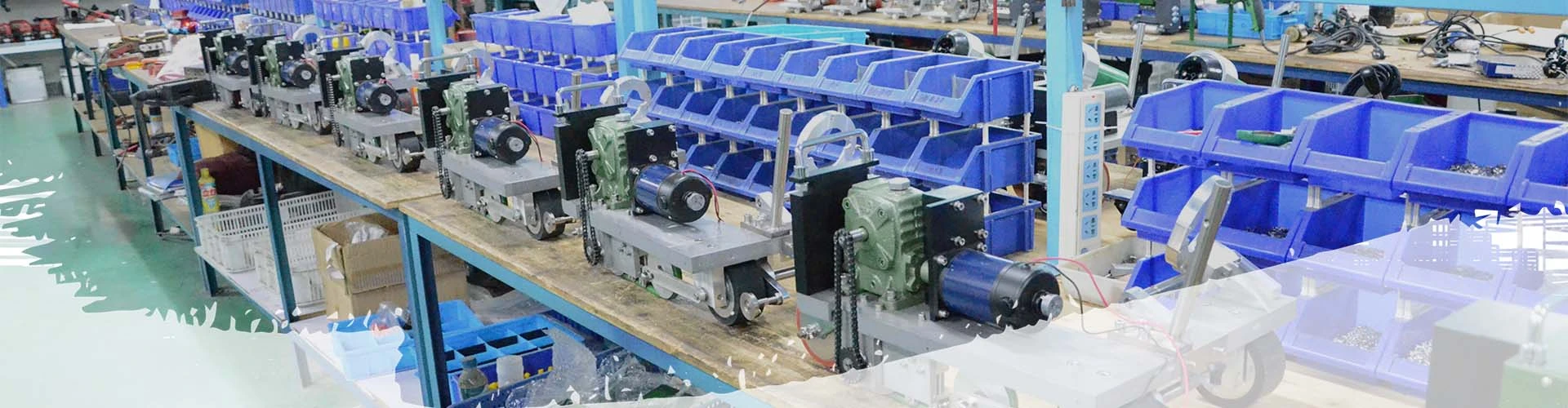
Extrusion Plastic Welding Gun Welding Geomembrane

Extrusion Plastic Welding Gun Welding Geomembrane
Jan . 16, 2025 18:14
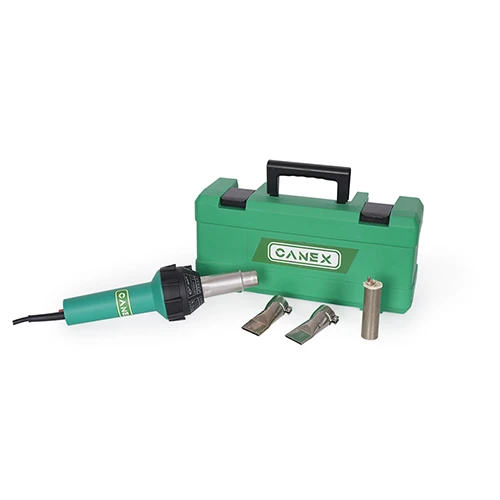
There are two welding methods for HDPE geomembrane: double-track hot melt welding and single-seam extrusion welding. In the construction of HDPE geomembrane, some areas that cannot be welded by double-track welding machines are often encountered, such as the connection with pipes and cement concrete. In such cases, a single-seam extrusion welding gun is required.
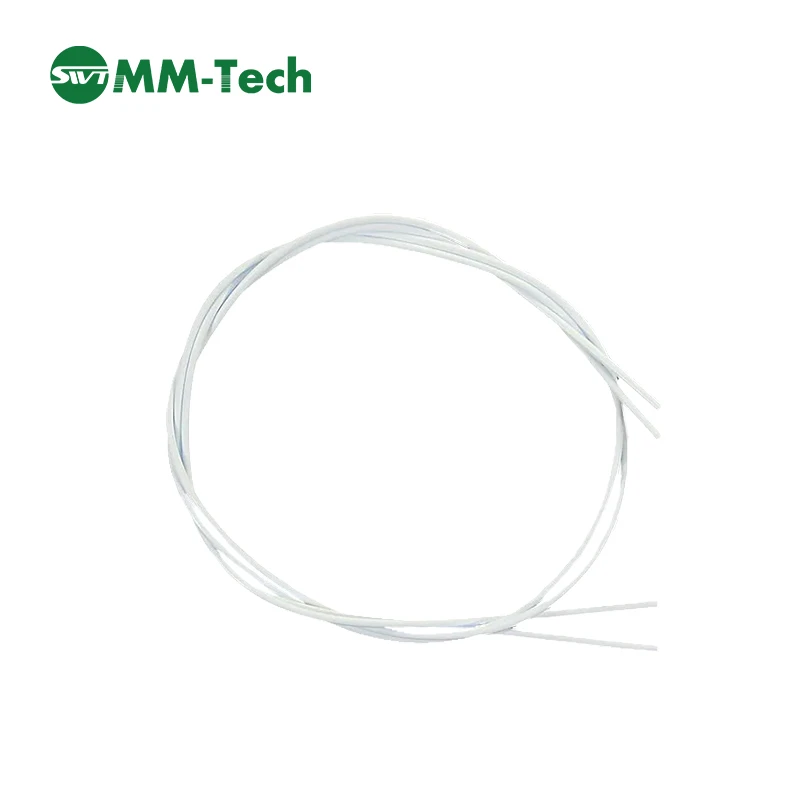
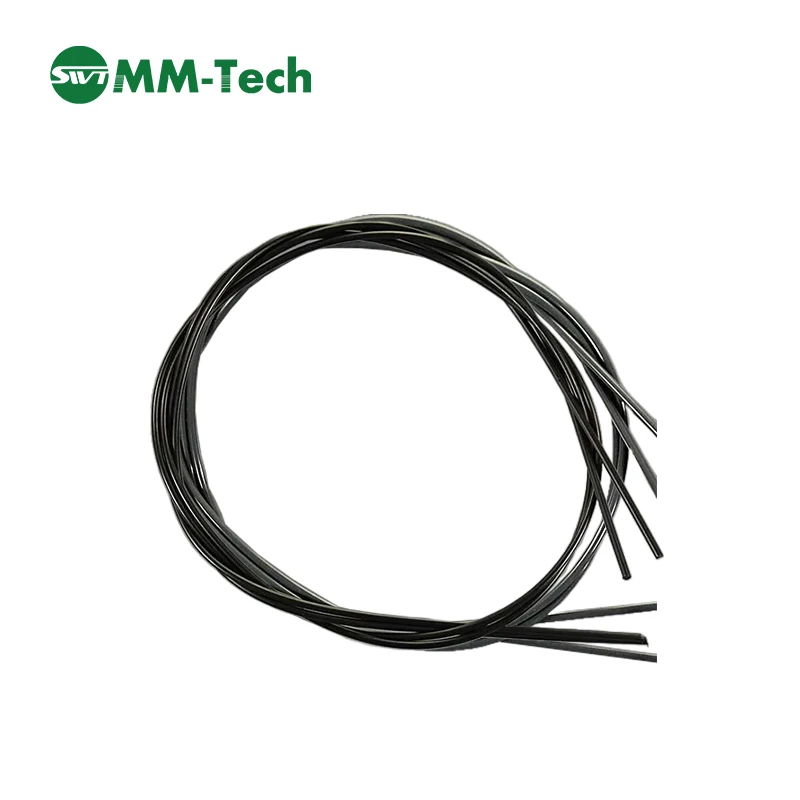
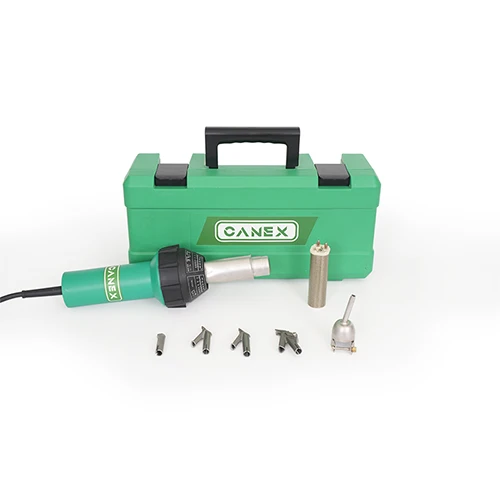
The single-seam extrusion welding gun, also known as a PP/PE plastic extrusion welding machine, is a device that welds geomembrane with plastic welding rods. The welding speed is 1.6 - 3.5 kilograms of welding rod per hour. It can work continuously for several hours and can achieve a perfect one-time welding formation for larger gaps. It is a commonly used device in geomembrane welding. It is mainly used to weld some parts that cannot be welded by double-track hot melt welding machines and to repair the defective and damaged parts of the weld.
- The requirements of extrusion welding construction specifications are as follows:
- Check whether the base at the joint is flat and solid. If there is any foreign matter, it should be properly handled in advance. Check whether the overlapping width at the weld is appropriate (≥ 60mm). The membrane at the joint should be flat, with moderate tightness and not form a "fish mouth".
- Positioning and bonding: Use a hot air gun to bond the overlapping parts of the two membranes. The distance between the bonding points should not be greater than 60 - 80mm. The temperature of the hot air should be controlled so as not to burn the HDPE geomembrane and not be easily torn.
- Roughening: Use a roughening machine to roughen the membrane surface within a width range of 30 - 40mm at the weld to achieve thorough cleaning and form a rough surface to increase the contact area, but the depth should not exceed 10% of the membrane thickness. When roughening, operate gently and try to minimize damage to the membrane surface. For membranes with a thickness equal to or greater than 2mm, a 45° groove should be made.
- Trial welding: Before formal welding, take a small sample not less than 300 × 600mm and preliminarily determine the equipment parameters according to experience for trial welding. Then cut the test piece and conduct shear and peel tests on a tensile machine. If the test results meet the requirements, lock the equipment parameters and weld accordingly. Otherwise, readjust the machine, conduct trial welding and testing until it is qualified.
The evaluation criteria for successful or failed trial welding are:
When conducting shear and peel tests on the bonded weld, only the membrane can be torn, and no damage to the weld joint (i.e., FTB) should occur.
- The requirements of the welding operation process of the extrusion welding machine are as follows:
- When welding, the welding head should be aligned with the joint without deviation, and slipping welding and skipping welding are not allowed.
- The thickness at the center of the weld should generally be 2.5 times the thickness of the anti-seepage membrane and not less than 3mm.
- When a joint cannot be welded continuously, the welded part of the joint should be roughened at least 50mm and then lap welded.
- The welding rods used must be kept clean and dry before entering the machine. Do not wipe the welding rods with gloves, dirty cloth, cotton yarn, etc. with oil stains and dirt.
- Conduct cooling treatment on the weld immediately according to the temperature.
- When the extrusion welding operation is interrupted for some reason, the extrusion amount of the welding rod must be gradually reduced. Do not suddenly interrupt the welding. When restarting the construction, roughen the part from where it was interrupted and then weld.
- An extrusion welding operation team generally consists of 3 - 4 people. The roughening process should be carried out one step in advance appropriately, but not too much in advance. The person responsible for cooling must be timely. The person responsible for the welding rod must adapt to the welding speed.
- Defect Detection and Repair
Defect detection should be carried out in all areas with and without welds.
Three steps of defect marking:
- Any damage to the weld or other parts should be circled, and a "P" should be marked in the circle to indicate that this part needs to be repaired.
- If the damage is not as serious as an actual hole, only circle it to indicate that it can be repaired by extrusion welding.
- After all repairs, non-destructive tests should be carried out, and finally, a comprehensive inspection should be carried out by the site supervisor.
Repair procedures:
- The following methods are used alone or in combination:
Holes, tears, uneven distribution of HDPE geomembrane raw materials - repaired by extrusion welding;
Small-scale repairs caused by extrusion welding - re-welded after grinding;
Unqualified welds - re-welded after covering with a layer of HDPE geomembrane.
- Pay attention to keeping the site clean and dry during repair to ensure that the equipment is normal and without failure.
- All repairs or coverings must extend at least 120cm beyond the damaged part and must be rounded.
Protection of Finished Geomembrane:
- When walking on the paved and welded geomembrane, do not wear hard-soled shoes, and there should be no nails, iron soles or other things that can damage the geomembrane on the shoes.
- During installation operations and after paving and welding the geomembrane, it is strictly prohibited to smoke or use matches, lighters, chemical solvents or similar items on site.
- When transporting on the membrane, the metal legs of the wheelbarrow should be covered with soft rubber materials. When transporting materials by car, try to avoid the car running on the membrane. If it is really necessary to drive on the membrane, necessary protective measures should be taken according to the situation of the base under the membrane. When the base under the membrane is a qualified non-stone, dense clay layer, the car can be allowed to go straight. Otherwise, a soil membrane or geotextile should be added on the membrane, and the car is not allowed to make sharp turns.
- When unloading materials on the membrane, even if there is a geotextile protective layer, heavy and hard items should not be dropped from a height and directly impact the anti-seepage layer.
- Prepare enough temporary sandbags during construction to prevent the laid geomembrane from being blown up by strong winds. In case of strong winds, the geomembrane should be temporarily anchored.

Related Products
Related Video
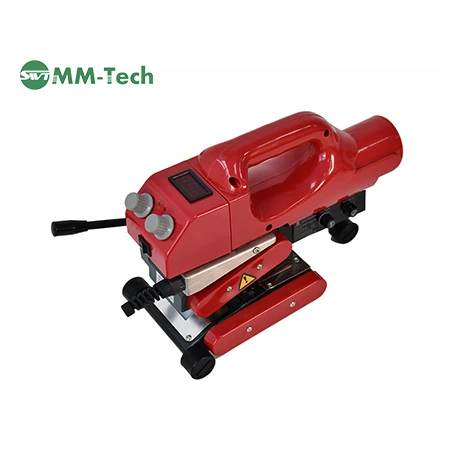

Geo Hot Wedge Welder With Digital Display SWT NS800D Operation Guide
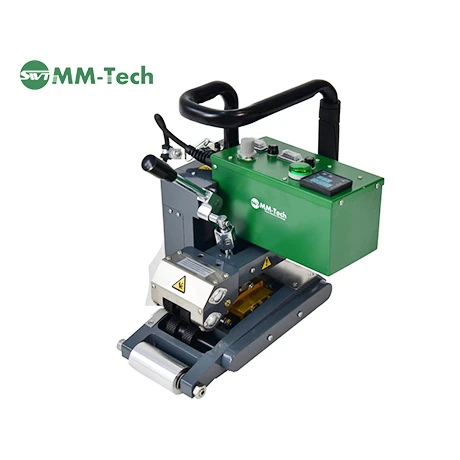
Heavy-Duty Geo Hot Wedge Welder SWT-NS900 Operation Guide
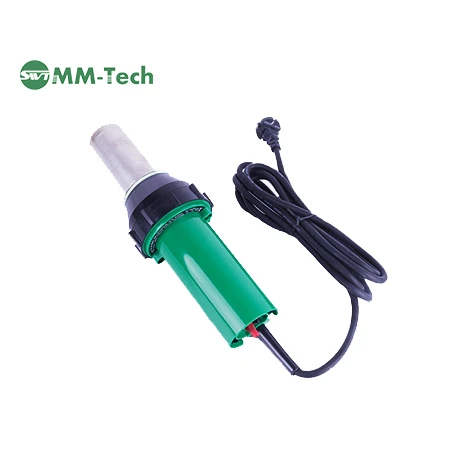
Powerful Professional Hot Air Tool SWT-NS3400A Operation Guide
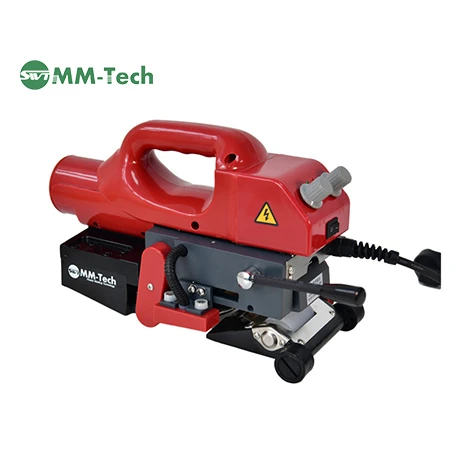
Geo Hot Wedge Welder SWT NS800 Operation Guide
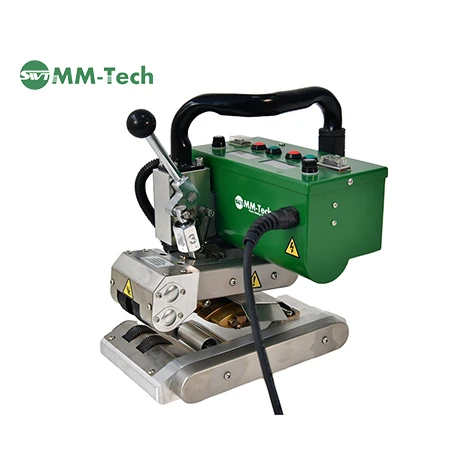
Compact HDPE Hot Wedge Welding Machine SWT-NSGM1 Operation Guide
Related News
2026-04-16 03:09:36
Improve Production Quality Using an Inline Coil Tester System
In the high-precision world of electrical component manufacturing, ensuring the integrity of every single wind is critical. An inline coil tester serves as the ultimate guardian of quality, integrating seamless testing directly into the production line. By detecting defects in real-time, manufacturers can eliminate the risk of faulty coils reaching the assembly stage, thereby reducing waste and protecting brand reputation. Whether you are producing inductors, transformers, or specialized electromagnets, implementing a robust testing strategy is no longer optional—it is a competitive necessity. This guide explores how inline testing transforms efficiency and precision in modern workshops.
2026-04-09 03:15:45
Industrial Leak Detection Using Electronic Spark Tester Guide
In the world of industrial maintenance and pipeline integrity, identifying microscopic leaks can be a daunting challenge. An electronic spark tester serves as a critical diagnostic tool, allowing technicians to pinpoint holidays—tiny pinholes or discontinuities in protective coatings—that are invisible to the naked eye. By applying a high-voltage current to the coating, these devices create a visible spark where the coating is compromised, ensuring that assets are fully protected against corrosion. In this guide, we will explore how this technology works and why it is indispensable for maintaining long-term structural safety.
2026-04-07 03:06:14
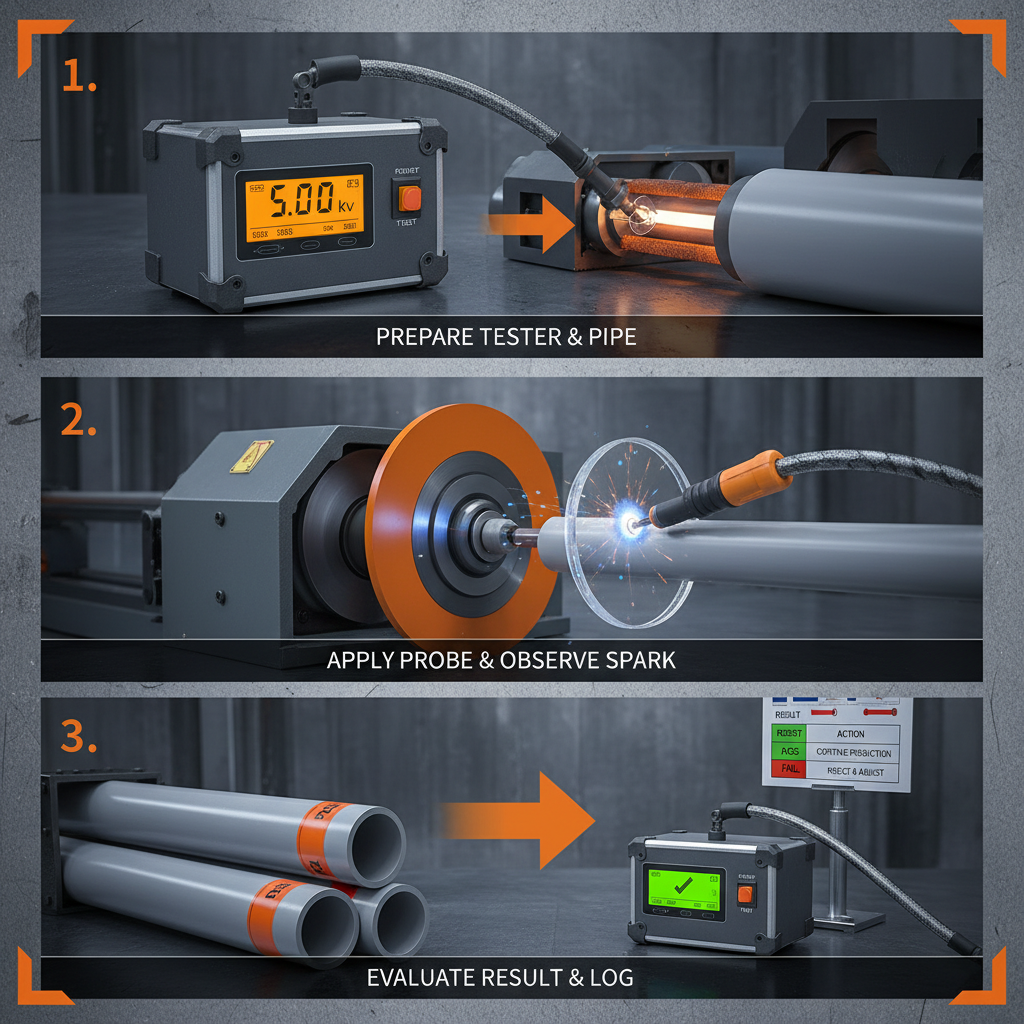
Enhancing Weld Quality with a Versatile Dynamic Spark Tester
In the realm of welding and fabrication, ensuring the quality and integrity of welds is paramount. A dynamic spark tester is an indispensable tool for quickly and reliably assessing weld quality. This article will delve into the functionality, benefits, applications, and considerations when selecting a dynamic spark tester, particularly focusing on how Aqua Fusion Welder's offerings meet industry demands. We’ll explore how this crucial piece of equipment can enhance your quality control processes and reduce costly rework.
2026-04-04 03:16:07
Understanding the Power of a Digital Spark Tester for Weld Quality Assurance
In the realm of welding, particularly fusion welding, ensuring the integrity of the weld is paramount. A reliable method for quickly verifying weld quality is crucial for efficiency, safety, and cost-effectiveness. A digital spark tester offers a non-destructive testing solution, providing immediate feedback on weld penetration. This article will explore the benefits, applications, and key considerations when selecting a digital spark tester, especially concerning Aqua Fusion Welder's offerings. Effective weld quality control is not merely a best practice; it's a necessity for ensuring long-lasting, dependable results.
2026-03-31 03:08:14
Understanding and Utilizing a Calibrated Spark Tester for Quality Welding
In the realm of welding, ensuring quality and safety is paramount. A crucial tool for achieving this is the calibrated spark tester. This device is vital for verifying the correct settings on a hot gas welding machine, ensuring consistent and reliable welds. This article delves into what a calibrated spark tester is, how it works, its importance in various applications, choosing the right tester, maintenance best practices, and safety precautions. We’ll explore its role in optimizing welding processes and upholding industry standards.
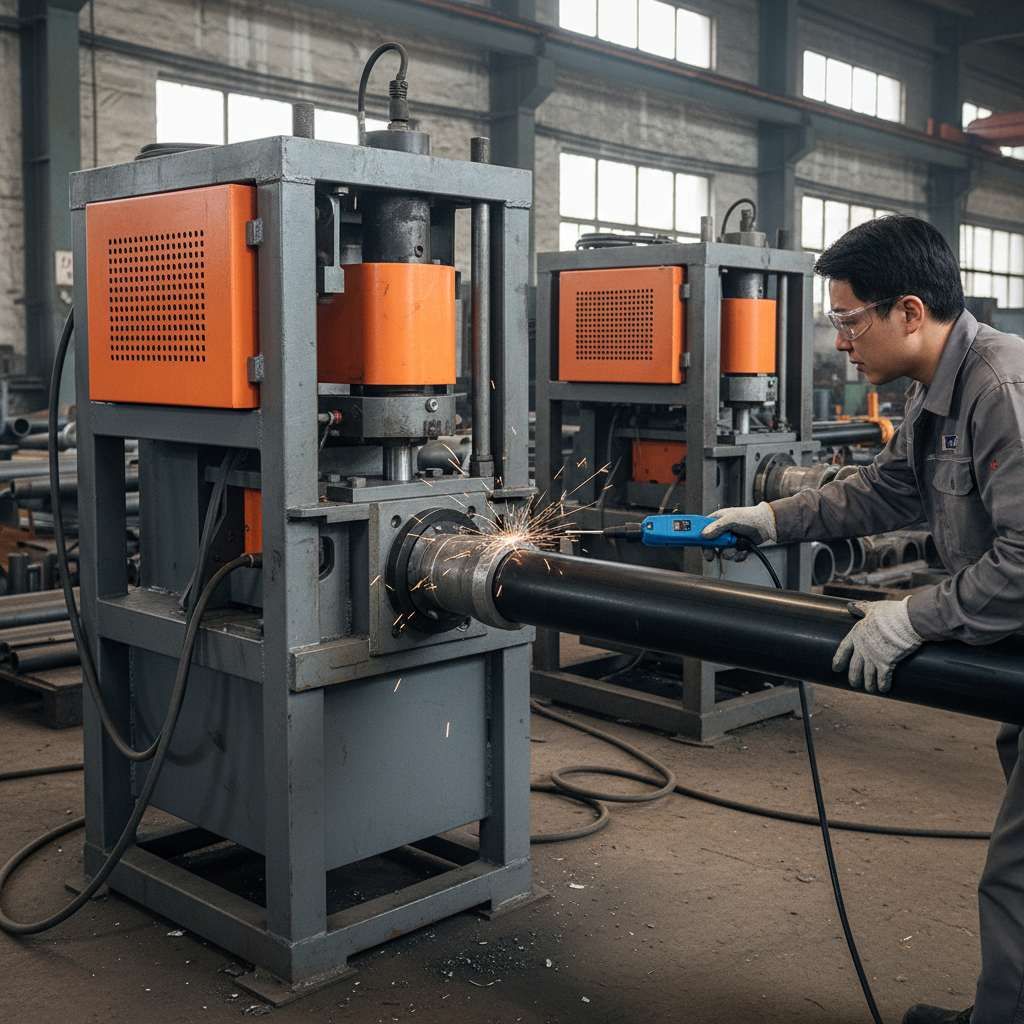
2026-03-28 03:25:06
Comprehensive Guide to the Blue Point Spark Tester for Welding Optimization
When dealing with gas metal arc welding (GMAW) and flux-cored arc welding (FCAW), ensuring a proper arc and consistent weld quality is critical. The Blue Point Spark Tester is an invaluable tool for verifying proper electrical connections and detecting potential issues before welding begins. This article provides a detailed overview of the Blue Point Spark Tester, its functionality, applications, and how it can improve your welding outcomes. Investing in a reliable spark tester like this can save time, materials, and ensure a higher quality of weld.
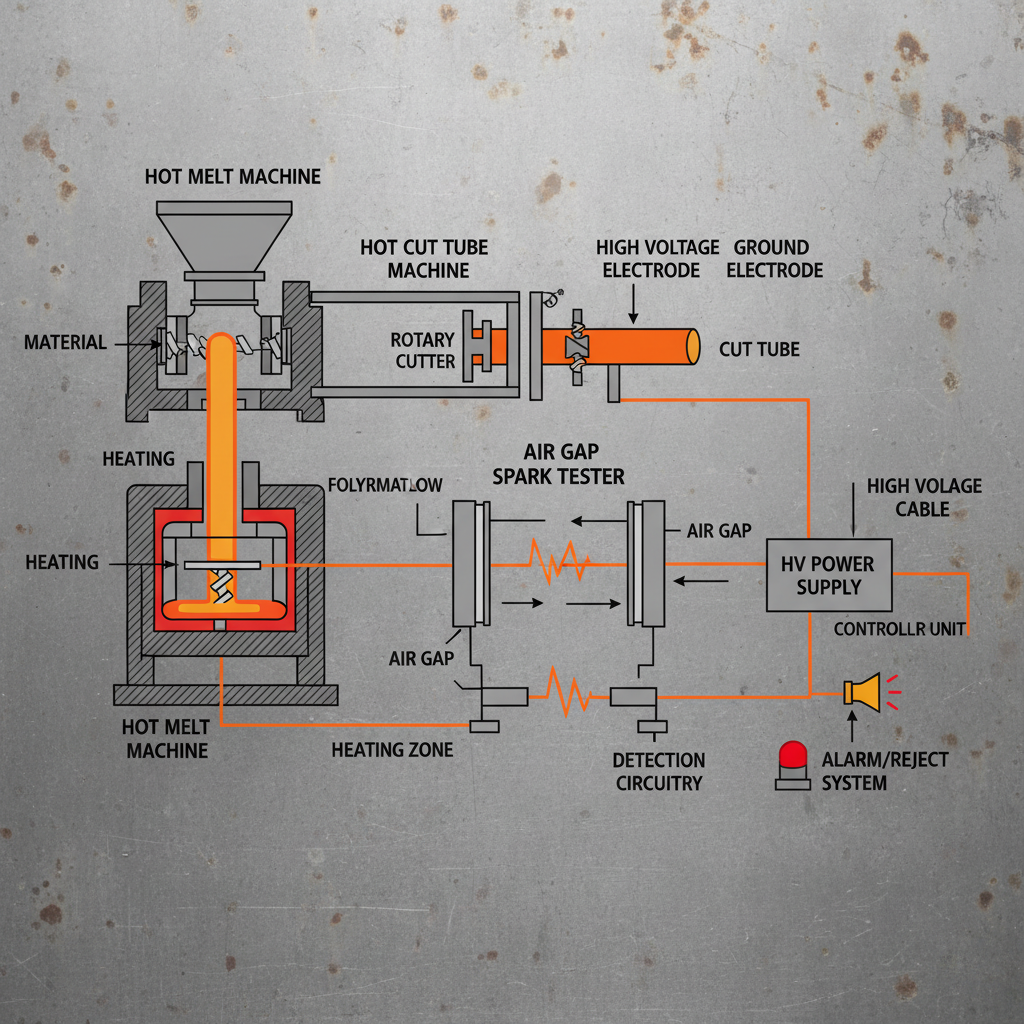
2026-03-26 03:15:05
Comprehensive Guide to Air Gap Spark Tester Applications and Selection
In the realm of welding and metal fabrication, ensuring the quality and integrity of welds is paramount. An air gap spark tester is a vital tool for non-destructive testing, allowing professionals to quickly and accurately identify potential issues in welds. This article provides an in-depth exploration of air gap spark testers, their applications, benefits, and considerations for choosing the right model. From quality control to safety, understanding this technology is crucial for maintaining high standards in your welding processes. Aqua Fusion Welder provides high-quality solutions for all your welding testing needs. An air gap spark tester, also known as a porosity tester, is a device used to detect the presence of air gaps, porosity, or incomplete fusion in welds. It works by applying a high-voltage electrical discharge across the weld surface. If flaws exist, the spark will travel through the air gap, producing a visible arc and indicating a defect. This provides a quick and efficient method for identifying potential weaknesses that could compromise the weld's structural integrity.
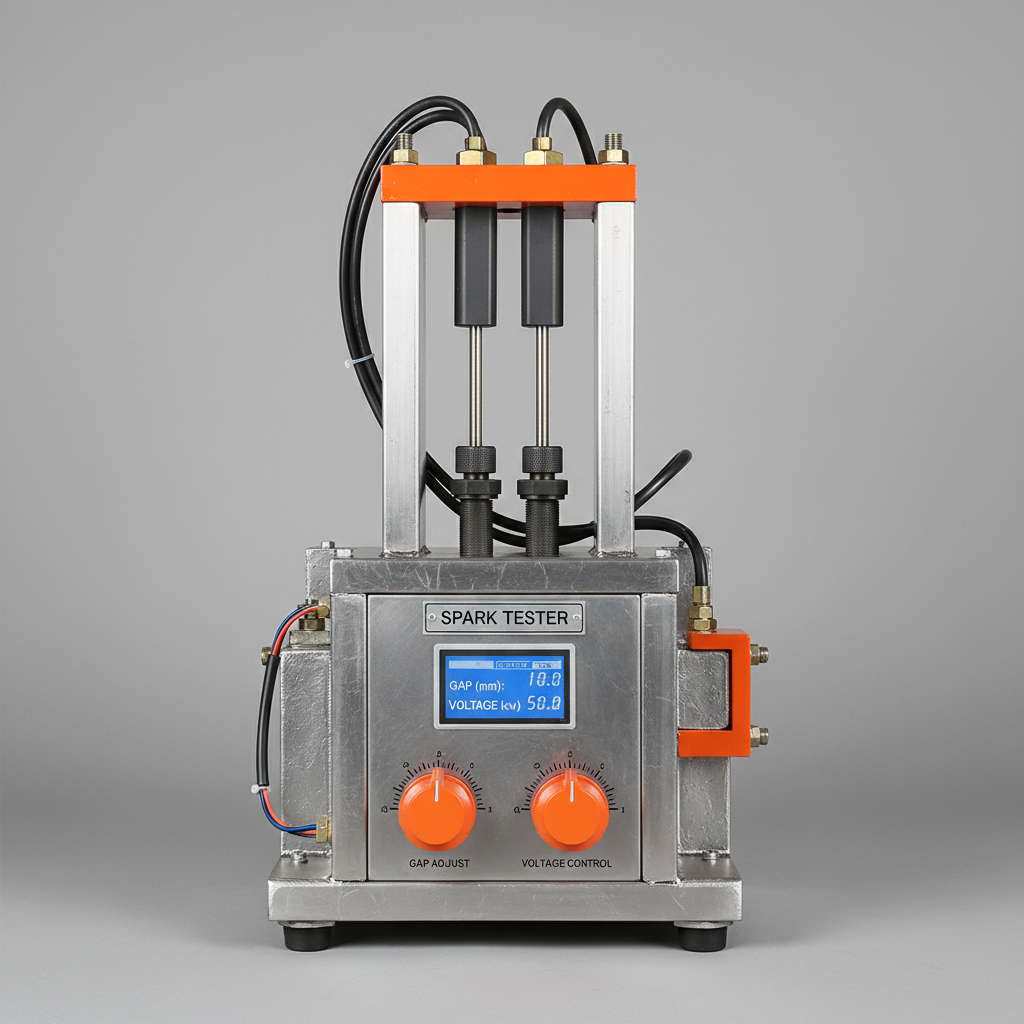
2026-03-24 03:17:19
Comprehensive Guide to the Adjustable Gap Spark Tester for Weld Quality Assurance
The adjustable gap spark tester is an essential tool for quality control in welding applications, particularly for polyethylene (PE) and polypropylene (PP) piping systems. This article dives deep into its functionality, benefits, applications, and why choosing a reliable tester like those from Aqua Fusion Welder is critical for ensuring weld integrity. Properly assessing weld quality prevents costly failures and maintains the long-term reliability of critical infrastructure. Let's explore the core principles and advantages of using an adjustable gap spark tester. An adjustable gap spark tester is a non-destructive testing (NDT) device used to identify gaps or voids within a weld. It operates on the principle of high voltage discharge. When a high voltage is applied across the weld, it arcs across any gaps or imperfections, creating a visible spark. The size of the adjustable gap determines the sensitivity of the test; a smaller gap detects smaller flaws.
SUBSCRIBE NEWSLETTER
Dear customer, thank you for your attention! We provide high-quality machinery and equipment and look forward to your orders. Please inform us of your needs and we will respond quickly!






 English