Email:news@peweldingmachine.com
+86-137 3974 5191
NO.355,Youyi Street,Qiaoxi District,Shijiazhuang,Hebei,China.
You know, I’ve been running around construction sites for fifteen years, and honestly, things are changing fast. Everyone's talking about prefabrication now, modular construction... it’s not just a buzzword anymore. They want everything faster, lighter, and, of course, cheaper. And that puts a ton of pressure on the components, especially when it comes to joining things together. Forget about welding huge steel beams, it’s all about these smaller, more precise connections these days.
There's also a big push for sustainable materials, which is good, obviously. But it introduces its own set of headaches. You think you’ve got a strong material, and then you find out it reacts weirdly to certain adhesives or temperatures. It’s a constant learning process, believe me.
And I tell you what, after all these years, you start to notice patterns. Design-wise, people often overcomplicate things. They try to be clever, make something "innovative," and end up with something that's a nightmare to assemble in the field. Simplicity is key, always.
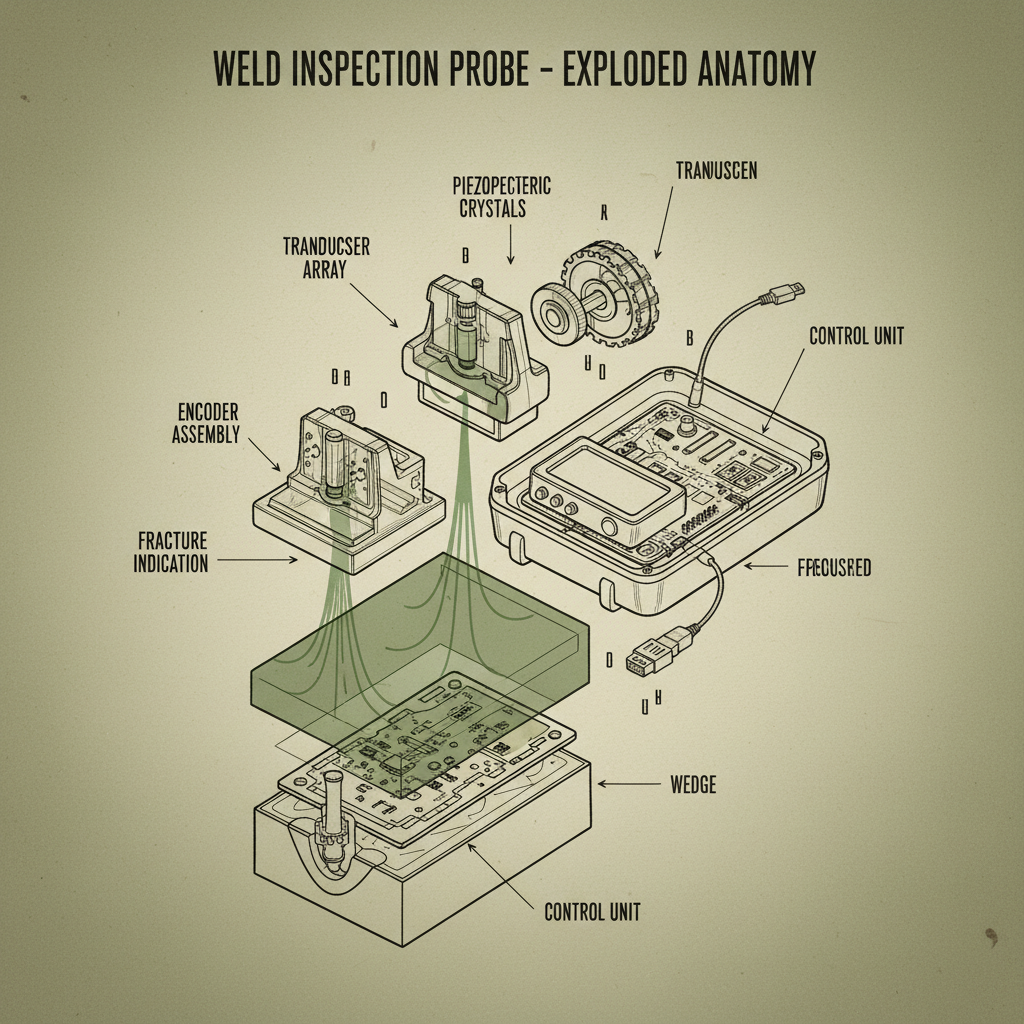
To be honest, the biggest trend I’ve seen is the demand for non-destructive testing. Everyone wants to check their welds without actually breaking anything. It's about preventative maintenance, catching issues before they become catastrophes. And that’s where a lot of the new weld inspection equipment comes in. But people often get caught up in the technology and forget the basics. Like, a fancy ultrasonic tester won't help if your surface prep is terrible.
Have you noticed how much everyone focuses on speed? It’s all about getting the job done faster. And that often leads to corners being cut. Proper training, thorough inspections… those are the first things to go. It's a dangerous game, really.
Okay, so let’s talk materials. We're seeing a lot more aluminum, especially in lightweight structures. It smells… different, doesn't it? Kind of metallic and clean. Unlike steel, which always has that oily, earthy scent. But aluminum’s tricky to weld, requires different techniques, different inspection methods. And then there’s the composites – carbon fiber, fiberglass… they feel solid, but they're completely different beasts. You can't just apply the same principles you use with metal.
I encountered this at a factory last time, they were using a new type of high-strength steel. The welders were struggling with it, kept getting porosity. Turns out, the steel had a higher sulfur content than they were used to. Simple stuff, but it caused a huge delay.
And don’t even get me started on the different types of filler metals. You’ve got your ER70S-6, your E71T-1… the list goes on and on. Each one has its own characteristics, its own quirks. You need to know what you're doing, or you'll end up with a weld that's weaker than the base metal.
Lab tests are fine, but they don't tell you the whole story. You need to see how these things perform in the real world. I’ve seen welds pass every lab test imaginable, only to fail spectacularly on site. Why? Because the conditions are different. Temperature fluctuations, vibration, corrosion… those things all take a toll.
Strangely, one of the best tests is just a good, old-fashioned hammer tap. You listen to the sound. A solid weld will ring, a bad weld will sound dull. It sounds silly, but it works. We also do a lot of dye penetrant inspection, visually checking for cracks and porosity. It’s messy, but effective.
And then there’s radiographic testing, using X-rays. That’s where you really see what’s going on inside the weld. But it’s expensive and requires a lot of safety precautions. It's reserved for critical applications.
This is where things get interesting. You design this fancy piece of equipment, thinking people will use it exactly as intended. But then you go to the site, and you see them rigging it up in ways you never imagined. They're adapting it to their specific needs, finding workarounds. Sometimes it’s ingenious, sometimes it’s… terrifying.
I’ve seen guys using ultrasonic testers upside down, just to reach a difficult weld. I’ve seen them modifying dye penetrant applicators with duct tape. They’re resourceful, these guys. But it also highlights the need for training and understanding. You can’t just hand someone a piece of equipment and expect them to use it correctly.
Anyway, I think the biggest advantage of the newer weld inspection equipment is the portability. These things are getting smaller and lighter, making it easier to take them to the job site. And the data logging capabilities are fantastic. You can track your inspections, identify trends, and improve your quality control.
But there are downsides. The price, for one. Some of these systems cost a fortune. And the software can be clunky and difficult to use. A lot of these companies are run by engineers who have never stepped foot on a construction site. They design things that look good on paper, but don’t work well in practice. Customization is possible, of course. Last year, a client wanted a specific type of probe for inspecting welds in a tight space. It wasn't standard, but we worked with the manufacturer to get it done.
Last month, that small boss in Shenzhen who makes smart home devices insisted on changing the interface to , and the result was a disaster. He thought it looked more “modern” and “premium.” He refused to listen to anyone, said it would be a huge selling point. We warned him that most of the technicians on the shop floor were used to the old USB interface and didn’t have the right tools or training. He didn’t care.
Sure enough, production ground to a halt. The technicians kept damaging the ports, and the quality control team couldn’t get reliable readings from the inspection equipment. He ended up having to revert back to the old interface, losing a week of production and a lot of money. It was a classic case of form over function.
It just goes to show, sometimes the simplest solution is the best. And you need to listen to the people who are actually doing the work. They know what works and what doesn’t.
We use a pretty basic system for tracking performance. It's not fancy, mostly just a spreadsheet. But it gets the job done. We track things like inspection time, defect rate, and cost per inspection. And we compare different types of weld inspection equipment to see which ones are the most effective.
The table below shows a comparison of some common inspection methods. These numbers are rough estimates, of course, based on our experience. It varies depending on the application, the skill of the operator, and a whole lot of other factors.
But it gives you a general idea of the trade-offs involved. Sometimes you need speed, sometimes you need accuracy, and sometimes you need something that's just reliable. It’s all about finding the right tool for the job.
| Inspection Method | Detection Sensitivity | Inspection Speed | Cost (Relative) |
|---|---|---|---|
| Visual Inspection | Low | High | 1 |
| Dye Penetrant Testing | Medium | Medium | 3 |
| Ultrasonic Testing | High | Medium | 6 |
| Radiographic Testing | Very High | Low | 8 |
| Phased Array UT | Very High | Medium | 7 |
| Time of Flight Diffraction (TOFD) | Very High | Medium | 9 |
Honestly, it’s not thinking about the application. They get caught up in the specs and features and forget what they're actually trying to achieve. Are they inspecting small, intricate welds? Large, heavy-duty structures? The equipment needs to be matched to the job. Don't just buy the fanciest thing on the market. Consider portability, ease of use, and the skill level of the operators. A simpler tool used correctly is always better than a complex tool used incorrectly.
Crucial. Absolutely crucial. You can have the best equipment in the world, but if the operator doesn't know how to use it properly, it's worthless. They need to understand the principles of welding, the different types of defects, and how to interpret the results. Training should be ongoing, not just a one-time event. And it needs to be practical, hands-on training, not just lectures. I've seen too many accidents and failures caused by inadequate training.
Radiographic testing, that’s your X-rays, gives you a picture of the entire weld, showing internal flaws like porosity and cracks. It’s great for overall assessment, but it's expensive and requires safety measures. Ultrasonic testing sends sound waves into the material and detects flaws based on how the waves bounce back. It’s more portable and cheaper, but it requires more skill to interpret the results and it doesn’t give you a visual image.
False positives are a pain, no doubt. It's about understanding the equipment and the material. Sometimes it's a matter of adjusting the settings, calibrating the instrument correctly. Other times, it's about recognizing surface conditions that can mimic a defect. Experience is key here. And always, always verify your findings with a secondary method. Don't just rely on a single test.
Automation, definitely. We're starting to see more robotic inspection systems, using drones and automated crawlers. And artificial intelligence is playing a bigger role, helping to analyze data and identify potential defects. It’s still early days, but I think we'll see a lot more of that in the future. I'm not saying it'll replace human inspectors entirely, but it will definitely augment their capabilities. There’s still no substitute for a good pair of eyes and a bit of common sense.
Absolutely! People overlook this all the time. If your equipment isn’t calibrated and maintained properly, your readings are going to be unreliable. Think of it like your car: if you don’t change the oil, it’s going to break down. Regular calibration, cleaning, and software updates are essential. It's an investment, but it’ll save you headaches – and potentially lives – in the long run.
Ultimately, all this fancy technology, all the materials science, all the sophisticated testing methods... it all comes down to one thing: a reliable weld. And whether that weld is going to hold up under pressure, whether it's going to last, whether it's going to keep people safe, that's what really matters. Weld inspection equipment is just a tool, a means to an end.
So, don’t get bogged down in the details. Focus on the fundamentals: proper training, thorough inspection, and a healthy dose of common sense. Because in the end, whether this thing works or not, the worker will know the moment he tightens the screw. And that’s the honest truth.

SUBSCRIBE NEWSLETTER
Dear customer, thank you for your attention! We provide high-quality machinery and equipment and look forward to your orders. Please inform us of your needs and we will respond quickly!
If you are interested in our products, you can choose to leave your information here, and we will be in touch with you shortly.