• Group_308.webp1
  • Group_308.webp2
  • Group_308.webp3
  • Group_308.webp4
  • 819_2025032815210071348.png
0%

Table of Contents

Welding penetration testing machines represent a critical advancement in ensuring the integrity and reliability of welded joints across diverse industries. These sophisticated tools move beyond visual inspection, providing quantifiable data on weld quality, detecting internal flaws, and verifying adherence to stringent safety standards. As global infrastructure expands and the demand for robust, long-lasting structures increases, the role of welding penetration testing machines becomes ever more paramount. This technology is essential for mitigating risks associated with weld failure, ultimately safeguarding lives and assets.

The significance of welding penetration testing machine extends beyond mere quality control. It’s intrinsically linked to economic efficiency. Early detection of weld defects, thanks to these machines, reduces costly rework, downtime, and potential catastrophic failures. Furthermore, compliance with international standards like ISO 3834 and ASME Section IX often necessitates the use of advanced non-destructive testing (NDT) methods facilitated by these machines. The demand for skilled technicians operating and interpreting results from welding penetration testing machine is also growing, creating new employment opportunities.

Investing in high-quality welding penetration testing machine isn’t just about meeting regulatory requirements; it's a strategic decision that enhances a company’s reputation for reliability and safety, building trust with clients and stakeholders. This technology is becoming increasingly accessible, with advancements in automation and data analysis making it easier for businesses of all sizes to implement robust weld inspection processes.
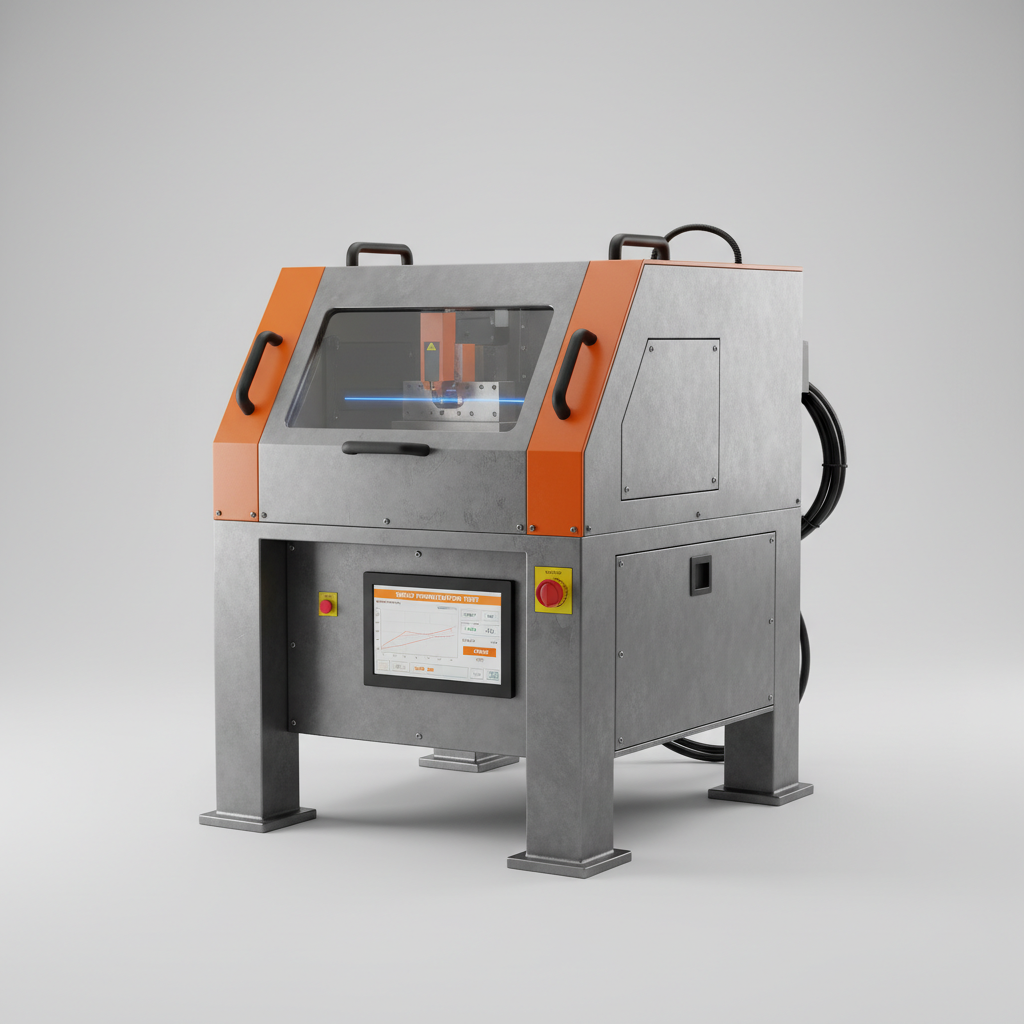
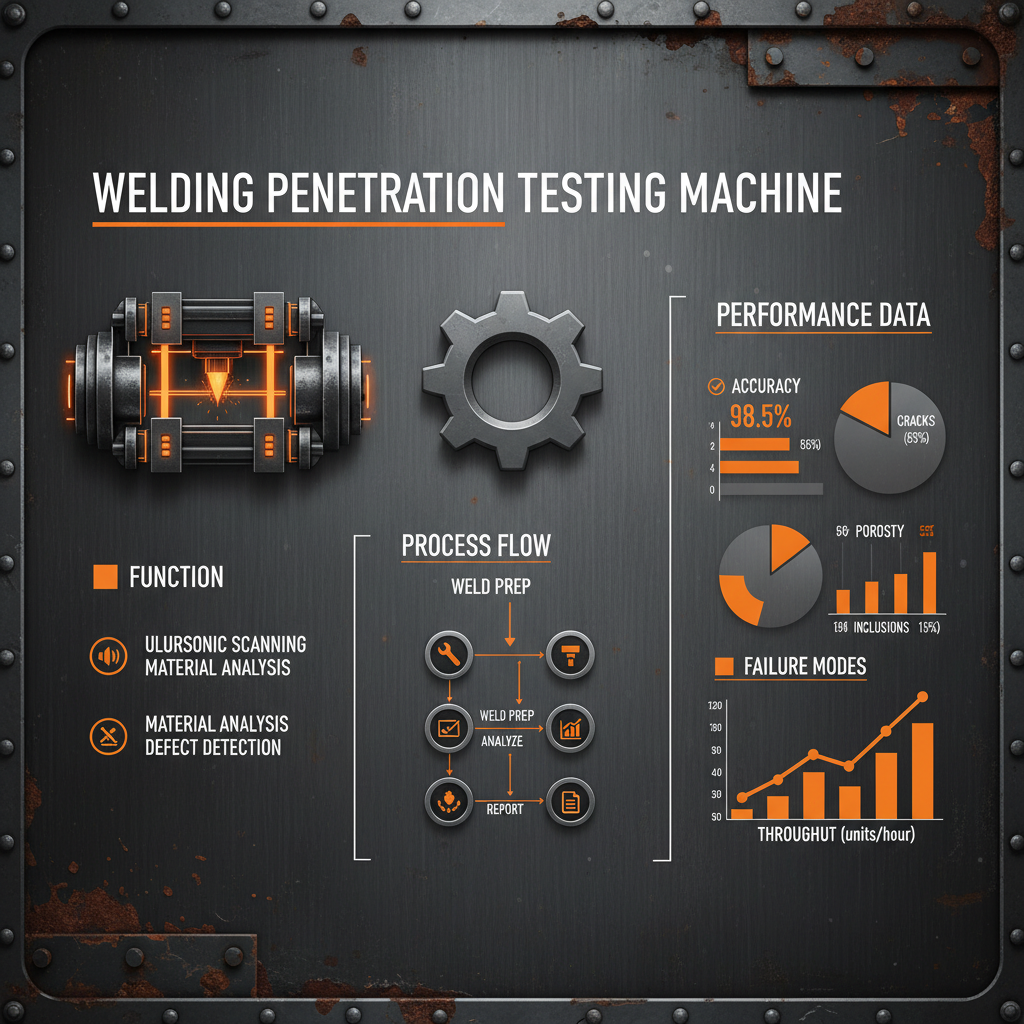
Advancements in Welding Penetration Testing Machine for Enhanced Structural Integrity

The Importance of Welding Penetration Testing Machine

Advancements in Welding Penetration Testing Machine for Enhanced Structural Integrity

The global reliance on welded structures is immense, spanning industries from aerospace and automotive to construction and oil & gas. The integrity of these welds is paramount to safety, performance, and longevity. Welding penetration testing machine are vital for verifying that welds meet the required standards, preventing failures that could have devastating consequences. Without effective testing, the risk of structural compromise and potential accidents increases significantly.

According to the American Welding Society (AWS), weld defects are a significant contributor to material failures. Investing in a robust welding penetration testing machine program is therefore not simply a matter of compliance, but a proactive measure to mitigate risk and protect valuable assets. The ability to accurately assess weld quality allows for early intervention, preventing minor defects from escalating into major problems.

Defining Welding Penetration Testing Machine

A welding penetration testing machine is a specialized piece of equipment used to non-destructively evaluate the internal quality of welded joints. Unlike visual inspection, these machines allow technicians to identify defects hidden beneath the weld surface, such as porosity, cracks, incomplete fusion, and inclusions. They utilize various techniques, including radiography (X-ray and gamma-ray), ultrasonic testing, phased array ultrasonic testing (PAUT), and eddy current testing.

The primary function of a welding penetration testing machine is to detect discontinuities within the weld metal and heat-affected zone, providing a detailed assessment of the weld’s structural integrity. This information is crucial for determining whether a weld meets specified acceptance criteria and is fit for its intended purpose. A welding penetration testing machine offers a level of precision and reliability far exceeding manual inspection methods.

Modern welding penetration testing machine often incorporate digital imaging and data analysis capabilities, allowing for the creation of permanent records and facilitating trend analysis. This digital data empowers engineers to identify potential weaknesses in welding processes and implement corrective actions to improve overall weld quality.

Key Components & Functionality

Several key components contribute to the functionality of a welding penetration testing machine. These include the source of energy (e.g., X-ray tube, ultrasonic transducer), detectors to capture the signal, data acquisition and processing systems, and imaging devices to visualize the results. Each component must be calibrated and maintained to ensure accurate and reliable testing.

Different types of welding penetration testing machine employ different functionalities. Radiography uses electromagnetic radiation to create an image of the weld’s internal structure. Ultrasonic testing utilizes high-frequency sound waves to detect defects by analyzing the reflection patterns. PAUT is an advanced ultrasonic technique that allows for beam steering and focusing, providing a more comprehensive assessment of the weld. Eddy current testing detects surface and near-surface defects using electromagnetic induction.

The selection of the appropriate welding penetration testing machine depends on factors such as the material being tested, the weld geometry, the type of defects being sought, and the applicable industry standards. It's important to consider the specific requirements of the application when choosing a machine.

Practical Applications Across Industries

The applications of welding penetration testing machine are widespread across numerous industries. In the aerospace sector, these machines are vital for inspecting critical components like engine parts and aircraft structures, ensuring flight safety. The automotive industry relies on them to assess the quality of welds in chassis, suspension systems, and other structural elements.

The construction industry utilizes welding penetration testing machine to inspect welds in bridges, buildings, and pipelines, guaranteeing structural integrity and preventing catastrophic failures. The oil and gas industry employs them extensively for inspecting welds in pipelines, pressure vessels, and offshore platforms, where safety and reliability are paramount.

Welding Penetration Testing Machine Method Effectiveness


Advantages & Return on Investment

Implementing a welding penetration testing machine program offers a significant return on investment. By identifying and rectifying defects early on, businesses can avoid costly rework, reduce downtime, and prevent potentially catastrophic failures. This translates into significant savings over the long term.

Beyond cost savings, welding penetration testing machine enhance safety, improve product quality, and build trust with customers. Demonstrating a commitment to quality assurance through rigorous testing can provide a competitive advantage in the marketplace. A welding penetration testing machine demonstrates a proactive approach to quality control.

Future Trends in Welding Penetration Testing Machine Technology

The future of welding penetration testing machine is being shaped by several key trends. Automation is playing an increasingly important role, with robotic systems being used to perform inspections more efficiently and consistently. Digital imaging and data analysis are becoming more sophisticated, enabling real-time monitoring and predictive maintenance.

Advancements in phased array ultrasonic testing (PAUT) and time-of-flight diffraction (TOFD) are providing higher resolution images and more accurate defect characterization. The integration of artificial intelligence (AI) and machine learning (ML) is enabling automated defect detection and classification, reducing the need for manual interpretation.

These innovations promise to enhance the speed, accuracy, and reliability of welding penetration testing machine, further solidifying its role as an essential tool for ensuring the integrity of welded structures.

Common Challenges & Innovative Solutions

Despite the advancements in welding penetration testing machine, certain challenges remain. These include the cost of equipment, the need for skilled technicians, and the complexity of interpreting results. Access to testing in remote locations can also be a challenge.

Innovative solutions are being developed to address these challenges. Portable and handheld welding penetration testing machine are making testing more accessible in the field. Online training programs and certification courses are helping to address the skills gap. Cloud-based data analysis platforms are simplifying the interpretation of results.

Furthermore, the development of more affordable and user-friendly equipment is making welding penetration testing machine accessible to a wider range of businesses. Continuous improvements in software and algorithms are streamlining the testing process and enhancing the accuracy of defect detection.

Summary of Welding Penetration Testing Machine Challenges and Solutions

Challenge Impact on Welding Quality Potential Solution Implementation Cost (1-10)
High Equipment Cost Limited access to advanced NDT for smaller businesses. Leasing options, shared service models, and development of more affordable machines. 7
Lack of Trained Personnel Inaccurate interpretation of results leading to false positives or missed defects. Expanded training programs, online certification courses, and automated analysis software. 6
Complex Data Interpretation Time-consuming analysis and potential for human error. AI-powered defect recognition software and cloud-based data analysis platforms. 8
Accessibility in Remote Locations Delays in inspection and increased transportation costs. Portable and handheld welding penetration testing machine, drone-based inspection systems. 5
Standardization of Procedures Inconsistent testing protocols leading to unreliable results. Development and adoption of standardized testing procedures aligned with industry best practices. 4
Maintaining Calibration Inaccurate readings and compromised test results. Regular calibration schedules, automated calibration tools, and documented quality control processes. 6

FAQS

What are the primary benefits of using a welding penetration testing machine over visual inspection?

While visual inspection is a starting point, it only detects surface flaws. A welding penetration testing machine, such as utilizing ultrasonic or radiographic methods, can reveal internal defects like porosity, inclusions, and cracks that are invisible to the naked eye. This provides a far more comprehensive and reliable assessment of weld integrity, significantly reducing the risk of unexpected failures and ensuring structural safety. This leads to lower lifecycle costs and enhanced product reliability.

How often should welding penetration testing be performed?

The frequency of welding penetration testing depends on several factors, including the criticality of the weldment, the applicable industry standards (e.g., ASME, AWS), the welding process used, and the potential consequences of failure. Critical applications, such as pressure vessels or aerospace components, typically require 100% testing, while less critical applications may allow for statistical sampling. Regular scheduled testing, along with testing after any repairs or modifications, is essential for maintaining weld integrity.

What training is required to operate a welding penetration testing machine effectively?

Operating a welding penetration testing machine requires specialized training and certification. Technicians must be proficient in the principles of NDT, the specific techniques employed by the machine, and the interpretation of results. Certifications, such as those offered by ASNT (American Society for Nondestructive Testing), are typically required to demonstrate competency. Ongoing training is also important to stay up-to-date with the latest advancements in technology and standards.

What are the common limitations of different welding penetration testing methods?

Each method has its limitations. Radiography is effective at detecting volumetric defects but less sensitive to planar defects. Ultrasonic testing excels at detecting planar defects but can be challenging to interpret in complex geometries. PAUT offers improved resolution and versatility, while eddy current testing is primarily used for surface and near-surface flaw detection. Understanding these limitations is crucial for selecting the appropriate method for a given application.

How much does a typical welding penetration testing machine cost?

The cost of a welding penetration testing machine varies widely depending on the type of technology, its capabilities, and the manufacturer. Basic ultrasonic testing equipment can start around $5,000, while advanced PAUT systems can cost upwards of $50,000 or more. Radiographic systems, including X-ray sources and imaging equipment, can also be quite expensive. Leasing options are available, which can help to reduce the initial investment.

How does automation impact the effectiveness of welding penetration testing?

Automation significantly enhances the effectiveness of welding penetration testing. Robotic systems can perform inspections more consistently and efficiently than manual methods, reducing the risk of human error and improving data repeatability. Automated data analysis software can also quickly identify and classify defects, saving time and improving accuracy. Furthermore, automation allows for the inspection of welds in hazardous or difficult-to-access locations.

Conclusion

Welding penetration testing machine are undeniably critical for ensuring the safety, reliability, and longevity of welded structures across a vast range of industries. From aerospace and automotive to construction and energy, these technologies play an indispensable role in detecting hidden defects, preventing catastrophic failures, and upholding the highest standards of quality. The continuous innovation in this field, with trends towards automation, AI-powered analysis, and improved portability, promises to further enhance the capabilities and accessibility of welding penetration testing.

Investing in robust welding penetration testing machine programs isn't just a matter of compliance; it's a strategic decision that safeguards assets, protects lives, and fosters trust. We encourage you to explore the latest advancements in this field and consider how incorporating these technologies can benefit your organization. Visit our website at www.aquafusionwelder.com to learn more about our comprehensive range of welding penetration testing machine and services.

Robert Chen

Robert Chen

Robert Chen serves as the Head of Product Development at MM-Tech, leading a team dedicated to creating cutting-edge thermoplastic welding equipment. With a background in mechanical engineering and a passion for problem-solving, Robert has been with MM-Tech since its factory establishment in 2019. He’s spearheaded the development of several new
Previous Understanding the Versatility and Applications of the Tensiometer Instrument
Next Essential Guide to Welding Gas Flow Testers for Optimal Weld Quality

SUBSCRIBE NEWSLETTER

Dear customer, thank you for your attention! We provide high-quality machinery and equipment and look forward to your orders. Please inform us of your needs and we will respond quickly!

If you are interested in our products, you can choose to leave your information here, and we will be in touch with you shortly.