Ensuring the integrity of geomembrane liners is a critical requirement in environmental engineering, where a single microscopic puncture can lead to catastrophic groundwater contamination or structural failure. The spark jump tester serves as the primary line of defense in quality assurance, providing a non-destructive method to identify leaks in HDPE, PVC, and other polymer linings. By utilizing high-voltage arcs to detect discontinuities, these tools ensure that containment systems are truly impermeable.
Across the globe, the demand for rigorous leak detection has surged as environmental regulations become more stringent. From municipal landfills to industrial hazardous waste ponds, the application of a spark jump tester allows technicians to verify the fusion of seams created by hot air welders and extrusion welders. This process is not merely a formality but a vital safety protocol that protects local ecosystems and ensures long-term project viability.
Understanding the mechanics and application of the spark jump tester is essential for any contractor specializing in synthetic materials. By bridging the gap between installation and certification, these devices provide the empirical evidence needed to sign off on multi-million dollar infrastructure projects. In the following guide, we will explore the technical depth, global applications, and future innovations of this indispensable testing tool.
Global Relevance of Spark Jump Tester in Liner Integrity
In the context of global environmental protection, the spark jump tester is more than just a tool; it is a regulatory necessity. According to ISO standards for geosynthetics, the verification of seam integrity is mandatory for any containment system designed to hold hazardous liquids. As the World Bank increases funding for sustainable waste management in developing nations, the adoption of standardized testing tools has become a benchmark for project approval.
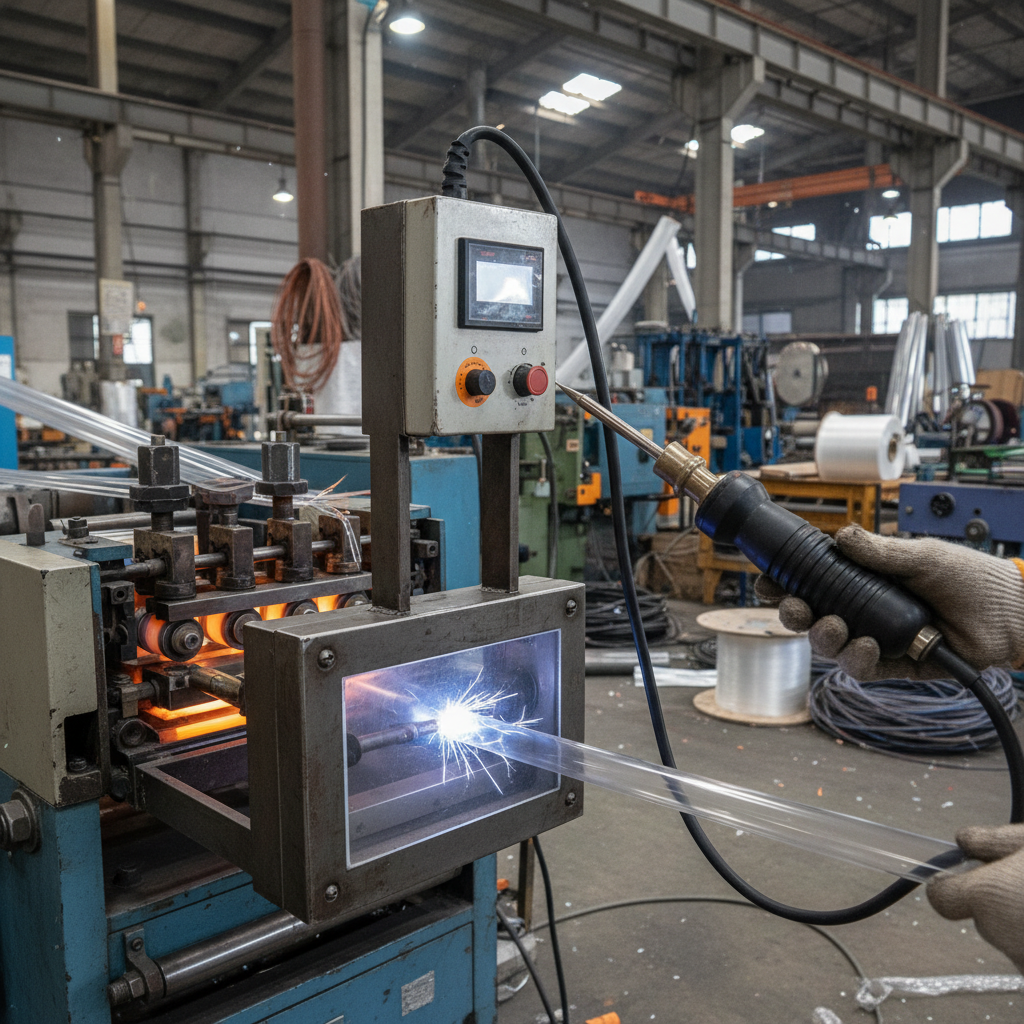
The primary challenge addressed by these testers is the "invisible leak." Traditional visual inspections cannot detect pinholes or cold welds that allow slow seepage. By introducing a controlled electrical discharge, the spark jump tester forces a visible and audible arc at the point of failure, transforming a hidden risk into a manageable repair task, thereby preventing environmental disasters before they occur.
Defining the Spark Jump Tester and its Industrial Role
At its most basic level, a spark jump tester is a high-voltage leak detection device specifically designed for use on conductive-backed geomembranes. It operates on the principle of electrical conductivity: the device creates a potential difference between a handheld probe and the conductive layer beneath the liner. When the probe passes over a hole, the electricity "jumps" across the gap, creating a spark.
Within the broader scope of the specialized equipment manufacturing industry, this tool occupies a critical niche. It complements the work of Cx Series Welders and Hand Extrusion Welders by providing the final verification step. Without the spark jump tester, the welding process remains an assumption; with it, it becomes a certified fact.
Modern humanitarian and industrial needs, such as the construction of emergency water reservoirs in disaster-prone areas or the lining of mining tailings ponds, rely on this technology. The ability to quickly deploy a tester and certify kilometers of lining ensures that vital resources are preserved and that toxic runoff does not infiltrate the surrounding soil.
Core Components for High-Precision Leak Detection
The effectiveness of a spark jump tester depends heavily on its voltage stability. High-quality units feature adjustable voltage controllers that allow operators to tune the intensity of the spark based on the thickness of the geomembrane, ensuring that the test is sensitive enough to find pinholes but not so powerful that it damages the material.
Durability is the second core component. Because these devices are used in harsh environments—ranging from dusty landfills to humid coastal regions—the housing of a professional spark jump tester is typically reinforced with impact-resistant polymers and weather-sealed gaskets to prevent internal circuitry failure.
Finally, the probe design and grounding system are paramount. A well-engineered spark jump tester uses a high-conductivity probe tip and a reliable grounding cable to minimize noise and false positives, ensuring that every spark detected corresponds to a genuine breach in the liner.
Comparative Efficiency of Testing Methods
When evaluating leak detection, the spark jump tester offers a distinct advantage in terms of speed and precision compared to vacuum box testing or air pressure testing. While vacuum testing is excellent for localized seams, it is labor-intensive and slow for large-scale projects. The spark method allows for rapid scanning of vast areas, significantly reducing the man-hours required for project certification.
Furthermore, the scalability of the spark jump method makes it the preferred choice for industrial-grade liners. Whether dealing with a small patch repaired by a Polymer Hot Air Welder or a massive expanse of HDPE, the consistency of the electrical arc provides a binary "pass/fail" result that eliminates operator subjectivity.
Comparative Performance of Spark Jump Tester Methods
Global Applications Across Environmental Sectors
The practical application of the spark jump tester spans multiple continents and diverse industrial landscapes. In North America and Europe, it is extensively used in the construction of hazardous waste landfills to comply with strict EPA and EEA regulations. Here, the tester ensures that the multi-layer lining systems are flawlessly integrated, preventing leachate from entering the water table.
In remote industrial zones, such as the mining sectors of Australia or the oil fields of the Middle East, the spark jump tester is used for lining tailings ponds and secondary containment areas. In these environments, the cost of a leak is not just financial but environmental and reputational. The ability to verify a seal in a remote location without requiring complex lab equipment makes the spark tester an indispensable field asset.
Long-Term Value and Safety Advantages
Investing in a high-quality spark jump tester provides tangible long-term value by drastically reducing the risk of project rework. Identifying a leak during the installation phase costs a fraction of what it would cost to repair a leak after the liner has been covered with tons of protective soil or waste. This proactive approach ensures the financial sustainability of the project and the safety of the surrounding community.
Beyond the logic of cost-efficiency, there is an emotional component: trust and dignity. For the engineering firms and contractors, being able to provide a certified spark-test report builds immense trust with the client and the public. It demonstrates a commitment to excellence and a refusal to compromise on safety, which is essential when dealing with environmental protection.
Reliability in these tools also translates to professional peace of mind. Knowing that every millimeter of a seam has been vetted by a spark jump tester allows project managers to sign off on their work with confidence, knowing they have utilized the gold standard of non-destructive testing.
Future Trends in Automated Leak Testing
The future of the spark jump tester is trending toward automation and digital integration. We are seeing the emergence of robotic crawlers equipped with spark sensors that can scan thousands of square meters of lining without human intervention. These systems not only increase speed but also provide a digital map of all detected leaks, allowing for pinpoint accuracy during the repair process.
Sustainability is also driving innovation. New generations of testers are incorporating green energy sources, such as high-efficiency lithium-polymer batteries and solar-charging stations, reducing the reliance on portable generators in the field. This shift aligns with the global push toward carbon neutrality in the construction and manufacturing industries.
Moreover, the integration of IoT (Internet of Things) allows a spark jump tester to upload test results in real-time to a cloud-based project management system. This enables remote stakeholders to monitor the quality assurance process from anywhere in the world, ensuring total transparency and adherence to international standards.
Technical Analysis of Spark Jump Tester Implementation Strategies
|
Implementation Mode
|
Detection Sensitivity
|
Operational Speed
|
Reliability Score (1-10)
|
| Manual Probe Scan |
High (Pinholes) |
Moderate |
8 |
| Automated Robotic Arc |
Ultra-High |
Very Fast |
10 |
| Conductive Layer Test |
High |
Fast |
9 |
| Randomized Spot Check |
Moderate |
Very Fast |
6 |
| Dual-Probe Verification |
Very High |
Slow |
9 |
| Voltage-Ramped Scan |
Customizable |
Moderate |
8 |
FAQS
A spark jump tester uses high-voltage electricity to detect gaps in a conductive-backed liner, making it significantly faster for large areas. A vacuum tester uses pressure differentials to find leaks in seams. While vacuum testing is highly accurate for specific joints, the spark tester is far more efficient for scanning broad surfaces of the geomembrane.
When used correctly and calibrated to the appropriate voltage for the material thickness, it will not cause permanent damage. The spark only occurs where there is already a breach or a thin spot. However, using excessively high voltage on very thin materials can cause "burn-through," which is why professional grade testers feature adjustable voltage controls.
The liner must have a conductive element, such as a conductive bottom layer or a conductive primer applied to the seams. The spark jump tester relies on a complete electrical circuit; if the material is purely insulating on both sides, the electricity cannot "jump" to ground, and the tester will not function.
For high-stakes environmental projects, calibration should occur at least once a year or at the start of every major project. Ensuring the voltage output is accurate is critical to meeting ISO and EPA standards. Most professional manufacturers provide calibration certificates to verify the tool's precision.
Yes, modern spark jump testers are designed specifically for field portability. They typically feature rugged, handheld designs with battery-powered operation, allowing technicians to move freely across large sites without being tethered to a power grid, making them ideal for remote mining or landfill sites.
Once a spark is detected, the technician should mark the spot and use a smaller, precision probe to pinpoint the exact center of the leak. After marking, the area is typically cleaned and repaired using an extrusion welder or a hot air welder, followed by a re-test with the spark jump tester to confirm the repair is successful.
Conclusion
The spark jump tester stands as an indispensable pillar of modern environmental engineering, transforming the way we verify the integrity of geosynthetic barriers. By combining high-voltage precision with rugged field portability, it provides a definitive solution to the challenge of invisible leaks, ensuring that landfills, mining ponds, and water reservoirs remain secure. From its core electrical components to its application in the most remote corners of the globe, this tool bridges the gap between installation and absolute certainty.
As the industry moves toward greater automation and digital transparency, the evolution of the spark jump tester will continue to drive higher standards of environmental safety. For contractors and engineers, adopting these advanced testing protocols is not just about compliance—it is about protecting the planet and ensuring the long-term reliability of critical infrastructure. To secure your project's future with the best testing tools, visit our website: www.aquafusionwelder.com.

 Email:news@peweldingmachine.com
 +86-137 3974 5191