Email:news@peweldingmachine.com
+86-137 3974 5191
NO.355,Youyi Street,Qiaoxi District,Shijiazhuang,Hebei,China.
Inline spark testers are critical tools across a wide range of industries, from manufacturing and construction to automotive and aerospace. These devices are used to non-destructively evaluate the quality of welds, ensuring structural integrity and preventing catastrophic failures. The ability to quickly and accurately assess weld quality is paramount for safety, reliability, and cost-effectiveness in modern engineering practices.
The global demand for robust quality control measures is steadily increasing, driven by stringent safety regulations, the rise of high-performance materials, and the need for greater efficiency in production processes. Inline spark testers provide a vital solution by offering real-time feedback during welding, allowing for immediate adjustments and minimizing the risk of defects. Adoption rates are growing as companies recognize the significant return on investment through reduced scrap, rework, and potential liability.
Understanding the principles and applications of inline spark testers is no longer limited to welding inspectors. Engineers, technicians, and quality assurance professionals all benefit from knowledge of these tools. This allows for better process control, informed decision-making, and ultimately, the delivery of safer, more durable products.
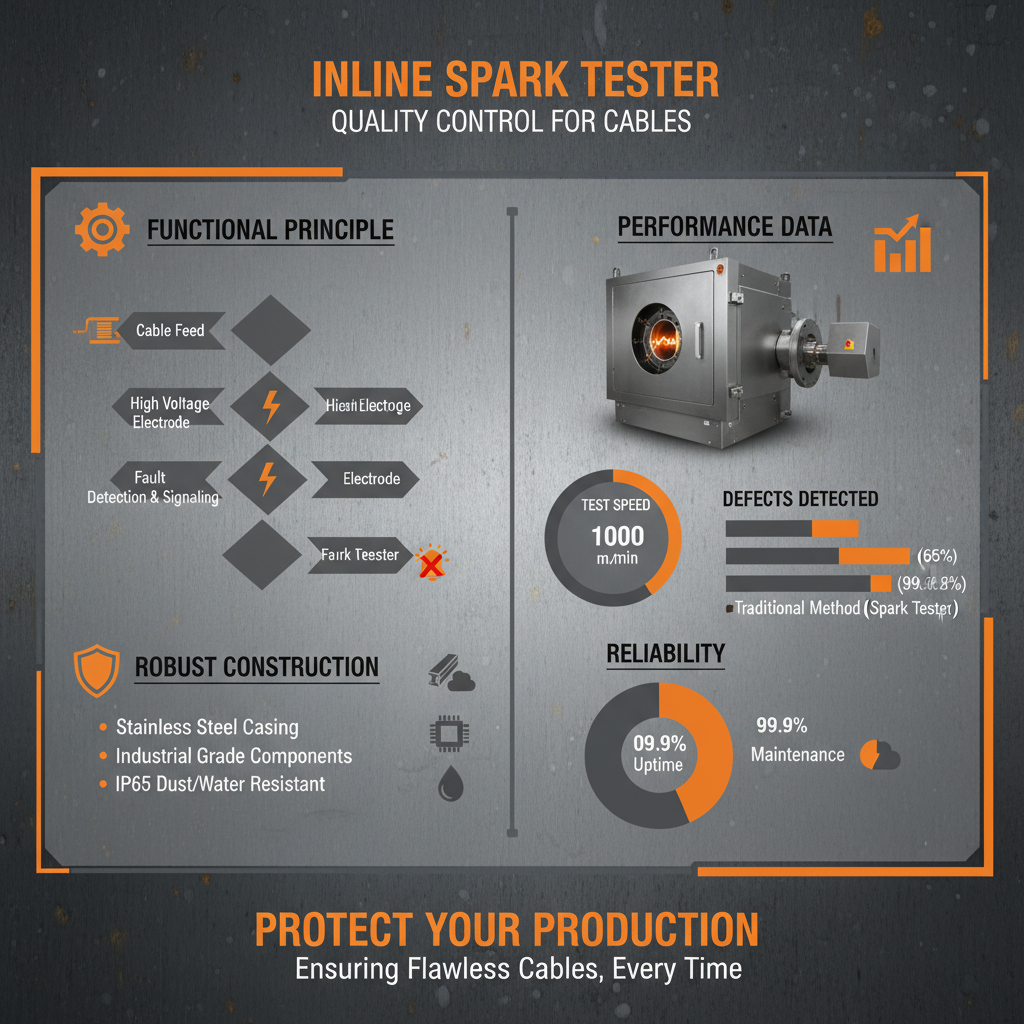
Inline spark testing is a cornerstone of modern quality control in welding processes. Its significance stems from the ability to detect defects during the weld, preventing faulty products from reaching the end user. This proactive approach drastically reduces material waste, lowers manufacturing costs, and minimizes potential safety hazards. inline spark tester provides a clear indication of weld integrity.
The impact extends beyond individual companies. Industries reliant on high-integrity welds, such as aerospace and pressure vessel manufacturing, benefit from the improved safety and reliability facilitated by these testing methods. Ultimately, this contributes to public safety and the longevity of critical infrastructure.
Inline spark testing, also known as spark testing or arc testing, is a non-destructive testing (NDT) method used to assess the quality of a weld. It operates on the principle that the characteristics of the spark generated when a high-voltage electrical arc is struck on the weld surface are directly related to the weld’s structural integrity. A consistent, stable spark indicates a sound weld, while erratic or irregular sparks suggest defects.
Unlike post-weld inspection techniques that identify defects after completion, inline spark testing occurs during the welding process, offering real-time feedback to the welder. This allows for immediate correction of parameters, minimizing defects and enhancing overall weld quality. It's a vital component in achieving consistent results.
Its connection to modern industry lies in its ability to meet the increasing demands for quality, safety, and efficiency. As manufacturing processes become more automated and materials become more specialized, the need for reliable, real-time quality control solutions like inline spark testing becomes ever more critical.
The fundamental principle of inline spark testing revolves around the ionization of air when a high-voltage arc is applied to the weld surface. The resulting spark’s visual characteristics – its length, shape, color, and sound – are influenced by the weld's metallurgical properties and the presence of defects. A sound weld will typically produce a consistent, bright, and uniform spark.
The key components of an inline spark testing system typically include a high-voltage generator, an electrode, a ground clamp, and a control unit. The high-voltage generator creates the electrical arc, the electrode delivers the arc to the weld surface, and the ground clamp completes the circuit. The control unit allows the operator to adjust testing parameters and interpret the results. Increasingly, these systems are integrating with automated weld control systems.
The interpretation of the spark characteristics requires trained personnel, but advancements in technology are leading to more automated analysis. Sophisticated algorithms can now analyze spark patterns and provide objective assessments of weld quality, reducing the reliance on subjective visual inspection.
Several factors influence the accuracy and reliability of inline spark testing. The most critical include the material being welded, the weld parameters (current, voltage, travel speed), the electrode material and condition, and the operator’s skill and experience. Understanding these factors is crucial for obtaining consistent and meaningful results.
Proper calibration of the spark testing equipment is also essential. Regular calibration ensures that the system is operating within specified parameters and provides accurate readings. Using a calibration standard and following established procedures are key to maintaining system integrity.
Inline spark testing finds widespread application across numerous industries. In the automotive sector, it’s used to ensure the quality of welds in chassis, exhaust systems, and other critical components. The aerospace industry relies on it for welding aircraft structures, where safety is paramount. inline spark tester are extensively used in this industry.
The construction industry utilizes inline spark testing for welding structural steel in buildings and bridges. Pressure vessel manufacturing, including pipelines and storage tanks, requires stringent weld quality control, making inline spark testing an indispensable tool. In post-disaster relief operations, rapid assessment of weld integrity in temporary structures is often critical.
The advantages of implementing inline spark testing are numerous. It significantly reduces the cost associated with scrap and rework, improves weld quality and consistency, enhances safety, and increases production efficiency. By detecting defects early in the process, costly repairs and potential failures are avoided.
The long-term value proposition extends beyond immediate cost savings. Improved weld integrity translates to increased product lifespan, reduced warranty claims, and enhanced brand reputation. Furthermore, the proactive approach to quality control fosters a culture of safety and continuous improvement within an organization.
The future of inline spark testing is focused on automation, integration with Industry 4.0 technologies, and the development of more sophisticated analysis algorithms. Artificial intelligence (AI) and machine learning (ML) are being employed to automatically interpret spark patterns, providing real-time feedback and reducing the need for manual inspection.
Another trend is the integration of inline spark testing with robotic welding systems. This allows for closed-loop control, where the welding parameters are automatically adjusted based on the results of the spark testing, creating a self-correcting and highly efficient welding process. Digital transformation is playing a huge role.
Sustainability is also driving innovation, with a focus on developing more energy-efficient spark testing systems and reducing waste. These advancements will further solidify the role of inline spark testing as a vital component of modern manufacturing.
| System Type | Accuracy (%) | Processing Speed (Welds/Minute) | Maintenance Cost (Annual) |
|---|---|---|---|
| Manual Inline Spark Tester | 85 | 5 | $500 |
| Semi-Automated System | 92 | 15 | $1,200 |
| Fully Automated System A | 95 | 30 | $2,500 |
| Fully Automated System B (AI-Powered) | 98 | 40 | $3,000 |
| Portable Inline Spark Tester | 80 | 3 | $300 |
| Inline Spark Tester with Remote Monitoring | 90 | 10 | $1,800 |
Inline spark testers are effective at detecting various weld defects, including porosity, cracks, lack of fusion, and undercut. The spark characteristics change based on the nature and severity of the defect. Porosity often results in a sputtering or erratic spark, while cracks can cause a shorter, inconsistent spark. Proper training is crucial for accurate interpretation.
Calibration frequency depends on the frequency of use and the severity of the operating environment. However, a general recommendation is to calibrate the system at least annually, or more often if the system is used heavily or exposed to vibration or extreme temperatures. Regular calibration ensures accuracy and reliability of test results.
Inline spark testing is applicable to a wide range of metals, including steel, aluminum, stainless steel, and other commonly welded alloys. However, the optimal testing parameters may vary depending on the specific material composition. It’s important to consult the manufacturer’s guidelines and adjust settings accordingly.
Effective operation requires thorough training in the principles of spark testing, defect recognition, and equipment operation. Training programs should cover proper electrode maintenance, calibration procedures, and interpretation of spark patterns. Certification programs are available to demonstrate competency.
While highly effective, inline spark testing has limitations. It may not detect subsurface defects as reliably as methods like ultrasonic testing or radiography. The interpretation of spark patterns can also be subjective, requiring skilled operators. It's best used in conjunction with other NDT techniques for a comprehensive quality assessment.
By detecting defects early in the welding process, inline spark testing minimizes the need for costly rework and repairs. It reduces scrap rates, lowers warranty claims, and prevents potential failures, leading to significant cost savings over the product lifecycle. The improved efficiency also translates to increased throughput.
Inline spark testing remains a vital, evolving technology for ensuring weld quality and structural integrity across diverse industries. Its ability to provide real-time feedback, coupled with advancements in automation and AI, continues to drive improvements in safety, efficiency, and cost-effectiveness. The core principle – relating spark characteristics to weld soundness – remains foundational, but the methods of implementation are becoming increasingly sophisticated.
Looking ahead, continued investment in research and development will be critical for unlocking the full potential of inline spark testing. Integrating this technology into broader Industry 4.0 ecosystems, and enhancing its ability to detect complex defects, will further solidify its role as a cornerstone of modern manufacturing and infrastructure development. Visit our website at www.aquafusionwelder.com to learn more.
SUBSCRIBE NEWSLETTER
Dear customer, thank you for your attention! We provide high-quality machinery and equipment and look forward to your orders. Please inform us of your needs and we will respond quickly!
If you are interested in our products, you can choose to leave your information here, and we will be in touch with you shortly.